


10kWh Battery Price Australia: Why a 16kWh LIB HomeStack Often Beats 10kWh Options
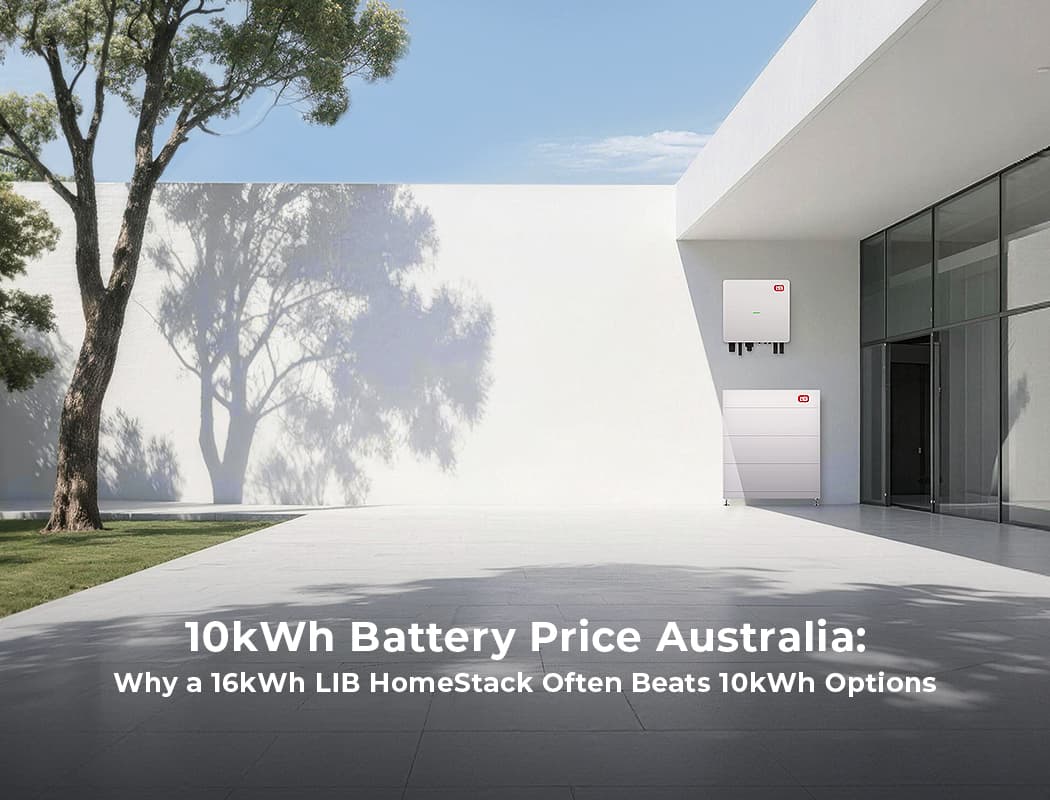
The 10 kilowatt-hour bracket is the most searched battery size in Australia, and for good reason. It sits in the sweet spot for a typical three to four person household with a solar system in the 6.6 to 10 kW range: large enough to cover most night time usage and energy consumption, small enough to remain accessible in price. But "10kwh battery price australia" searches return a frustrating spread of numbers, often ranging from $5,000 to $16,000 depending on what is and isn't included.
This guide cuts through that confusion. We look at what a 10kw solar battery actually costs in Australia in 2026 across the main battery brands on the market. We also cover how the LIB HomeStack from EnergyLIB sits relative to this size bracket, because while the LIB HomeStack starts at 16 kWh, its net battery cost after rebates makes it one of the most compelling options for households that would otherwise be looking at a 10 to 13 kWh system.
At EnergyLIB, we're Australia's first home energy brand designed exclusively for the home. Understanding solar battery price transparency is core to what we do so here are the real numbers, without the marketing padding.
Quick Answer: 10kWh Battery Price Australia 2026
- Typical installed price (10 kWh, before rebate): $10,000 to $14,000 including inverter and installation.
- After federal rebate: Approximately $5,000 to $10,000 net depending on brand, chemistry, and installation complexity.
- LIB HomeStack I alternative (16 kWh): ~$6,000 net installed after federal rebate at pre-1 May 2026 rates. More usable capacity for a similar or lower net cost.
- Key rebate deadline: Federal rebate tapers from 1 May 2026. Rebate reduces on batteries above 14 kWh. 10 kWh batteries remain at 100% STC coverage after May, but the STC factor itself also drops.
- What drives price variation: Battery chemistry, depth of discharge, inverter inclusion, installation complexity, brand, and warranty period.
What's Actually Included in a 10kWh Battery Price Quote?
Before comparing any battery price figures, you need to know what the quote includes. The average battery price advertised online is frequently hardware-only which means the battery modules alone, before installation costs, the hybrid inverter or battery inverter, or any electrical work.
A fully inclusive quote for a solar battery system in the 10 kWh range should cover: the battery hardware itself, a compatible hybrid inverter (if not already installed), installation labour, grid connection approval, switchboard work if required, commissioning and testing, and the federal battery rebate applied as a point-of-sale discount. Always confirm each of these line items before you vary depending on which quote you accept.
The initial cost on paper can look very different from the final cost once all components are included. This is particularly true for homes adding a battery to existing solar setups where an older string inverter may need to be replaced or supplemented with a battery inverter for AC coupling. The install costs for a retrofit are typically higher than for a new combined solar and battery installation.
Why the LIB HomeStack Deserves Comparison at This Price Point
The LIB HomeStack I has a storage capacity of 16.08 kWh which is more than any standard 10 kWh battery on the market. Yet its net installed solar battery cost after the federal battery rebate at pre-1 May 2026 rates is approximately $6,000. That is at or below the net cost of most 10 kWh battery system options once all components are included.
This pricing equation exists because of how the federal battery rebate is calculated: at approximately $311 per usable kWh, a 16 kWh battery attracts roughly $5,000 in STC rebate, while a 10 kWh battery attracts approximately $3,100. The larger battery captures more rebate value, which more than offsets its higher initial cost. The result is that a household comparing 10kwh battery price australia options may find that stepping up to a 16 kWh LIB HomeStack actually delivers a lower final cost after rebates.
| Feature | Typical 10 kWh Battery | LIB HomeStack I (16 kWh) |
|---|---|---|
| Usable capacity | 9.6–10.24 kWh | 16.08 kWh |
| Installed price (before rebate) | $10,000–$14,000 | ~$11,000 |
| Federal rebate (pre-1 May) | ~$3,000–$3,200 | ~$5,000 |
| Net installed cost | $6,500–$10,000 | ~$6,000 |
| Depth of discharge | 80–100% (varies) | 100% |
| Chemistry | LFP or NMC | LFP (314Ah cells) |
| Cycle life | 3,000–6,000 | 8,000+ |
| Warranty period | 5–10 years | 10 years |
| Inverter included in bundle price | Varies (often separate) | Yes — LIB hybrid inverter |
When you compare on a like-for-like basis, the LIB HomeStack I is a smart investment for households that were considering a 10 kWh battery. The additional flexible capacity means more stored solar energy available for night time usage, greater energy independence, and a shorter payback period.
What Drives 10kWh Battery Price Variation in Australia?
If you have received multiple quotes and seen a $3,000 to $5,000 range for ostensibly similar battery system options, here is what is driving that spread. Battery depends on far more than just the nameplate kWh. The following factors each contribute to the solar battery cost you see on your quote.
1. Battery Chemistry
The two main chemistries you will encounter in the Australian market are lithium ion NMC (nickel manganese cobalt) and lithium iron phosphate (LFP). LFP has a higher performance guarantee over time because it handles Australian heat better, delivers higher efficiency over the full warranty period, and offers substantially better cycle life.
Most popular solar batteries in 2026 use LFP. A lead acid battery at a lower price point is also available for off-grid applications but is not appropriate for grid-connected residential battery storage due to its shorter lifespan and lower power output.
2. Depth of Discharge
A battery advertised at 10 kWh nominal may only deliver 8 or 9 kWh of usable kilowatt hours depending on its depth of discharge rating. A battery at 80% DoD delivers 8 kWh of usable battery capacity from a 10 kWh unit. Always check the usable figure when comparing how much energy you will actually store. The LIB HomeStack delivers 100% DoD so how much power you store is exactly how much you use.
3. Inverter Inclusion
Whether a hybrid inverter or battery inverter is included in the quote is one of the biggest sources of price confusion. Many battery brands quote battery-only pricing, which excludes the inverter at $2,000 to $4,000. If you are adding a battery to an existing solar system with a compatible inverter already existing system, you may not need a new one. If you are starting fresh or your inverter is incompatible, the battery inverter cost must be factored into the upfront cost.
4. Installation Complexity
Standard installation costs for a residential solar battery in the 10 kWh range run $3,000 to $6,000 for most homes. However, homes that require switchboard upgrades, three phase supply wiring work, long cable runs, or complex integration with existing solar setups will see higher install costs. A site assessment by an accredited installer is the only reliable way to get an accurate final cost before committing.
5. Brand and Warranty Period
Premium battery brands with longer warranty period terms and stronger local support networks command a higher price tag than budget options. A longer warranty reflects greater manufacturer confidence in cycle life and cell longevity. The LIB HomeStack carries a 10-year warranty with a performance guarantee across all configurations, this is industry-standard at the premium end of the market and well above budget alternatives.
6. Backup Power Configuration
A standard battery storage installation charges and discharges from the grid and solar panels in normal operation. Adding blackout protection where the battery powers essential circuits or the whole home during a power outage requires additional wiring for backup power isolation. This typically adds $500 to $1,500 to the battery cost at installation and requires specific inverter capability. It is far cheaper to configure backup power at the time of installation than to retrofit it later.
How the Federal Battery Rebate Affects Your 10kWh Battery Price
The federal battery rebate is currently the most significant factor reducing upfront cost for Australian homeowners. Delivered through small scale technology certificates (STCs) under the Cheaper Home Batteries Program, it provides approximately $311 per usable kWh of battery capacity as a point-of-sale discount applied by your installer. You do not receive the rebate separately, it is already reflected in the price your accredited installer quotes.
For a 10 kWh battery, the battery rebate is approximately $3,100 to $3,200 at current pre-1 May 2026 STC rates. From 1 May 2026, the STC factor reduces, which means the government incentives available on a 10 kWh battery will be lower, though the 10 kWh bracket remains at 100% STC coverage (unlike batteries above 14 kWh which are tapered more aggressively). Interest free loans of up to $15,000 are also available in the ACT through the Sustainable Household Scheme, and additional state-level incentives are available in NSW, WA, and SA.
| Battery Size | Federal Rebate (pre-1 May 2026) | Federal Rebate (post-1 May 2026 est.) |
|---|---|---|
| 10 kWh | ~$3,100–$3,200 | ~$2,600–$2,700 (STC factor reduction only) |
| 13 kWh | ~$4,000–$4,100 | ~$3,400–$3,500 |
| LIB HomeStack I (16 kWh) | ~$5,000 | ~$4,200 (14 kWh at 100%, 2 kWh at 60%) |
| LIB HomeStack II (32 kWh) | ~$10,000 | ~$6,800 (larger taper) |
The key insight from this table is that the battery rebate value per kWh is highest for larger systems at current pre-May rates. A household that is deciding between a 10 kWh system and stepping up to 16 kWh gets disproportionately more rebate from the larger battery, which is why the LIB HomeStack I often lands at a lower net solar battery cost than a comparable 10 kWh option when all government incentives are factored in.
Will a 10kWh Battery Be Enough for Your Home?
Before committing to any size battery, it is worth understanding what a 10 kWh system can and cannot do for your energy needs. The right battery size depends on your electricity usage, the size of your larger solar system or existing panels, your energy consumption patterns, and whether you need backup power for essential circuits or the whole home.
A 10 kWh battery typically suits a 3 to 4 person household with energy bills in the $200 to $350 per quarter range and a 5 to 6.6 kW solar system. It will cover most night time usage for average energy consumption patterns like running the fridge, lighting, TV, and device charging overnight. It will not fully cover high energy usage homes, homes with a pool pump, EV charging requirements, or a three phase supply with heavy loads.
If your energy bills are above $400 per quarter, you have EV charging needs, or you want whole home backup rather than just essential circuits during a blackout protection event, a larger battery in the 16 to 32 kWh range will deliver better battery savings and a more compelling payback period. The additional stored solar energy shifts more energy consumption from grid electricity to solar, reducing power bills and electricity bills more aggressively over the battery's life.
10kWh Battery Price: What to Ask Before You Sign
Before accepting any quote for a solar battery in the 10 kWh range, these are the questions that determine whether the solar battery price you are being quoted represents genuine value or concealed costs:
| Question to Ask | Why It Matters |
|---|---|
| Is the hybrid inverter or battery inverter included? | Adds $2,000–$4,000 if excluded. Critical for true cost comparison. |
| What is the usable battery capacity (not nominal)? | 90% DoD = 9 kWh from a 10 kWh battery. Affects battery savings calculation. |
| Has the federal battery rebate been applied to this quote? | Should be a point-of-sale discount, not a post-purchase rebate. |
| What is the depth of discharge? | 100% DoD means every kilowatt hour is usable. 80% means 20% is locked away. |
| What is the cycle life and warranty period? | 8,000 cycles over 10 years vs 3,000 cycles over 5 years is a very different investment. |
| Are installation costs, switchboard work, and grid approval included? | These can add $1,000–$3,000 if not included in the quoted battery cost. |
| Is blackout protection/backup power included or extra? | Configure at installation — retrofitting backup power later costs significantly more. |
| Is the system compatible with three phase supply if applicable? | Three phase supply homes need specific inverter configurations. |
| Is the battery on the CEC approved list? | Required for the federal battery rebate. Non-CEC batteries are not eligible. |
The Smart Alternative: Why a 16kWh LIB HomeStack Often Beats 10kWh Options
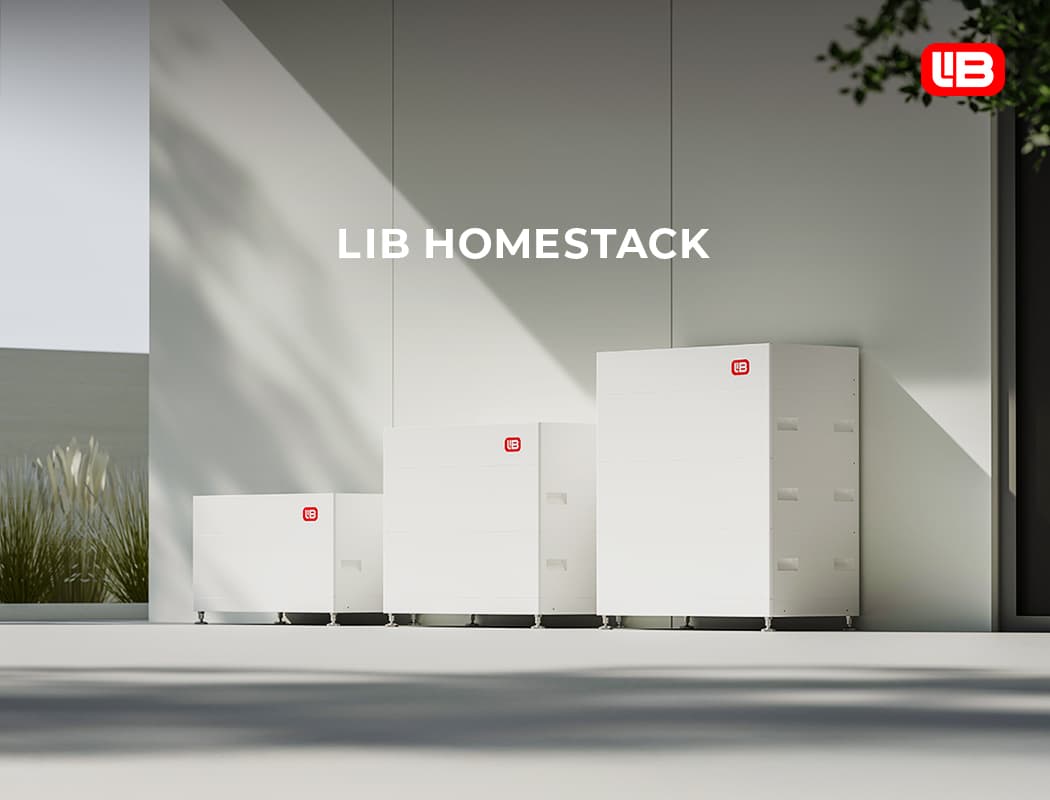
At current federal battery rebate rates, the LIB HomeStack I (16.08 kWh) from EnergyLIB represents one of the most compelling alternatives to a standard 10 kWh solar battery in Australia. The bundle price of $4,999 includes the LIB hybrid inverter, a component that adds $2,000 to $4,000 to most competitor quotes. After the $5,000 federal rebate and estimated installation costs, the net battery cost is approximately $6,000.
That net cost is lower than or equal to most 10 kWh home battery options once levelled on a fully-inclusive basis. Yet the LIB HomeStack delivers 60% more storage capacity, 100% depth of discharge, lithium iron phosphate chemistry rated for 8,000+ cycles, a 10-year warranty, and IP65 weatherproofing for indoor or outdoor installation costs.
The flexible capacity of the LIB HomeStack's stackable battery modules design means battery capacity can be expanded from 16 to 32 or 48 kWh as your energy needs grow, whether driven by a larger solar system addition, EV charging requirements, or a pool pump load. Most 10 kWh fixed-capacity systems do not offer this flexible capacity path.
Get a Real Price for Your Home: LIB HomeStack Quote Today
The solar battery price ranges in this guide are market averages. The number that matters to your power bills is the personalised quote based on your actual energy consumption, your existing solar system, your energy usage patterns, and your location.
Speak with the EnergyLIB team today. Installing solar and battery together? Ask about combined solar and battery packages. Already have rooftop solar? Ask about adding storage to your existing solar system. Either way, save money while the rebate is at its maximum value.
FAQs
How much does a 10kWh solar battery cost in Australia in 2026?
A 10 kWh solar battery system typically costs $10,000 to $14,000 fully installed including installation costs and inverter before the battery rebate is applied.
After the federal battery rebate via the Cheaper Home Batteries Program (approximately $3,100 to $3,200 for a 10 kWh system at pre-1 May 2026 STC rates), the net battery cost falls to approximately $6,500 to $10,000 depending on brand, chemistry, and installation costs.
The average battery price typically costs more when not all batteries include the inverter in the headline figure.
Is a 10kWh battery enough for an average Australian home?
A 10 kWh home battery is generally suitable for a 3 to 4 person household with moderate electricity usage and a 5 to 6.6 kW solar system. It will cover most night time usage and reduce energy bills by shifting stored solar energy away from grid electricity.
Homes with high energy consumption, EV charging requirements, a pool pump, or three phase supply loads may find a large battery in the 16 to 32 kWh range delivers better battery savings and a shorter payback period. Always match battery size to your actual energy needs and energy usage profile.
What is the federal battery rebate on a 10kWh battery?
The federal battery rebate on a 10 kWh battery is approximately $3,100 to $3,200 at pre-1 May 2026 STC rates, delivered through small scale technology certificates. This is applied as a point-of-sale discount by your installer, you do not receive it separately. From 1 May 2026, the STC factor reduces, lowering the government incentives available.
In 2025, the Australian federal government introduced a solar battery rebate that can reduce the cost of installing a battery by approximately 30% off pre-rebate prices.
The 10 kWh bracket remains at 100% STC coverage post-May (unlike systems above 14 kWh which face capacity-based tapering), but the reduced STC factor means the battery rebate will be approximately $400 to $500 lower per battery after that date.
State-specific rebates can provide additional savings of $2,950 to $3,000 for solar battery systems. State government incentive schemes, such as interest-free loans for battery installations, are available in Tasmania and the Australian Capital Territory, further reducing costs for homeowners.
In Western Australia, the solar battery rebate provides additional savings off the installation price, with Synergy customers saving $130 per kWh and Horizon customers saving $380 per kWh, capped at a maximum of 10 kWh of battery storage.
The New South Wales solar battery Virtual Power Plant (VPP) rebate can provide additional savings for households that connect their battery to a VPP, enhancing the financial viability of battery storage.
Should I get a 10kWh or 16kWh battery?
If you are comparing battery size options and your energy needs are close to a 10 kWh threshold, the LIB HomeStack I at 16 kWh is worth serious consideration.
The 16 kWh system delivers more stored solar energy per day, better battery savings, a shorter payback period, and flexible capacity for future expansion. Not all batteries at the 10 kWh mark include the inverter, which changes the true upfront cost comparison significantly.
Can I add a 10kWh battery to my existing solar system?
Yes. Adding a home battery to an existing solar system is the most common installation type in Australia. Whether you need a new battery inverter (AC coupling) or a hybrid inverter replacement (DC coupling) depends on your existing inverter's age and compatibility.
The federal battery rebate applies to retrofits to existing solar setups as well as new installations. Installation costs for a retrofit are typically slightly higher than for a new combined system. An accredited installer can assess your existing system and give you an accurate final cost including all installation costs, inverter work, and rebate applied.