


Are Solar Batteries Worth It in Australia in 2026?

If you have rooftop solar panels, you already know the frustration. Your solar system generates power all day while you are at work, exporting the surplus energy to the grid for a few cents per kilowatt hour, and then you come home to buy that same electricity back at peak rates.
The power generated by your solar panels is most valuable when it can be used or stored efficiently, making its management crucial for both economic and environmental benefits. The maths has never quite added up.
So are solar batteries worth the investment in 2026? With electricity prices continuing to rise, the federal battery rebate set to reduce from 1 May 2026, and battery prices falling steadily over the past three years, the answer for most Australian households is yes, if you choose the right battery system and size it correctly.
At EnergyLIB, we are Australia's first home energy brand designed exclusively for the home. Installing solar is the foundational step toward energy independence, and battery storage builds on that by enabling you to maximise the benefits of your renewable energy system. This guide breaks down the real financial benefits, explains when solar batteries make financial sense, and shows how the LIB HomeStack range is built to deliver long-term value across homes of all sizes.
Quick Answer: Are Solar Batteries Worth It?
- For most Australian households with solar panels: Yes. A correctly sized battery reduces electricity bills, captures surplus energy, and shortens the payback period.
- The financial case is strongest when: you have high peak energy usage, low feed in tariff rates, and access to the federal battery rebate.
- The federal rebate reduces from 1 May 2026. Acting before the reduction improves your return on investment.
- Key to ROI: Choose a battery with high usable capacity, long cycle life, and 100% DoD so you are not paying for energy you cannot access.
Why Solar Batteries Make More Financial Sense in 2026 Than Ever
Three factors have converged to make 2026 the strongest year yet for the solar battery investment case:
Stored solar energy can be used during peak periods, reducing reliance on expensive grid power and maximizing financial benefits. Solar batteries allow you to store excess energy generated during the day for use in the evening, helping to optimize your energy use and lower electricity costs.
1. Electricity Prices Are Still Rising
Australian households have experienced electricity price increases far exceeding general inflation. Since 2000, residential electricity prices have risen over 200%. Even with government interventions, the long-term trend is upward. Every kilowatt hour of stored energy you use from your battery is a kilowatt hour you do not buy from the grid at peak rates.
2. Feed-in Tariffs Have Dropped
The days of generous feed in tariff rates are over for most Australian households. In many states, energy retailers are now offering 3 to 7 cents per kWh for exported solar, while charging 30 to 50 cents or more for grid electricity during peak periods. That gap is the value a battery captures. The wider it gets, the faster your battery pays for itself.
3. The Federal Battery Rebate Is Reducing
The federal battery rebate under the Cheaper Home Batteries Program is available now, but it reduces from 1 May 2026 and tapers further for larger systems. This means the financial benefits of purchasing a battery sooner are tangible. Waiting costs you money in two ways: a smaller rebate and continued electricity bills at peak rates while you delay.
Rebate Timeline: Act Before 1 May 2026
- Current federal rebate: Available now through the Cheaper Home Batteries Program for CEC-approved batteries.
- From 1 May 2026: The rebate value reduces. Larger systems face additional tapering.
- Eligibility: Battery must be on the CEC approved list. All three LIB HomeStack models qualify.
- State rebates: Additional battery rebates may be available in your state. Check local programs for current availability.
How Much Do Solar Batteries Cost in 2026?
Solar batteries cost varies depending on storage capacity, battery chemistry, brand, and installation costs. As a general guide for Australian households:
- A 10 to 16 kWh battery system typically costs $8,000 to $14,000 installed. A 10kWh battery is often suitable for homes with average energy consumption patterns, providing enough usable capacity for most households without oversizing and ensuring a better return on investment.
- A 30+ kWh system for larger homes or EV charging ranges from $18,000 to $28,000 installed.
- Installation costs vary based on your existing solar system, whether you need a new hybrid inverter, and site-specific factors.
Battery prices have fallen significantly over the past five years, and the total cost continues to trend downward. When combined with the federal rebate and state battery rebates, the net cost of a quality battery system is lower than it has ever been.
The Payback Period: When Do Solar Batteries Pay for Themselves?
The payback period for a solar battery depends on several factors:
- How much energy you use during peak periods (the more you use, the faster the payback).
- Your feed in tariff rate (the lower it is, the more value a battery adds).
- The battery's usable capacity and whether 100% of it is accessible.
- Electricity prices and whether they continue to rise.
- Rebates and incentives that reduce the upfront cost.
For most Australian households with an existing solar system and moderate to high energy bills, the typical payback period is between 2 and 5 years. With a 10-year warranty and 8,000+ cycle life, a quality battery delivers significant financial benefits beyond the break-even point.
Worked Example: Solar Battery ROI for an Average Australian Home
- Daily energy usage: 22 kWh
- Evening and overnight usage (covered by battery): 12 kWh
- Grid electricity avoided per year: ~4,380 kWh
- Savings at $0.35/kWh peak rate: ~$1,533 per year
- Battery cost (after federal rebate): Approx. $4,000 to $10,000 depending on size and state incentives
- Estimated payback: 3 to 6 years
- Battery lifespan: 22+ years (8,000+ cycles). Years 7 to 22 are pure savings.
Which Battery Size Delivers the Best Return?
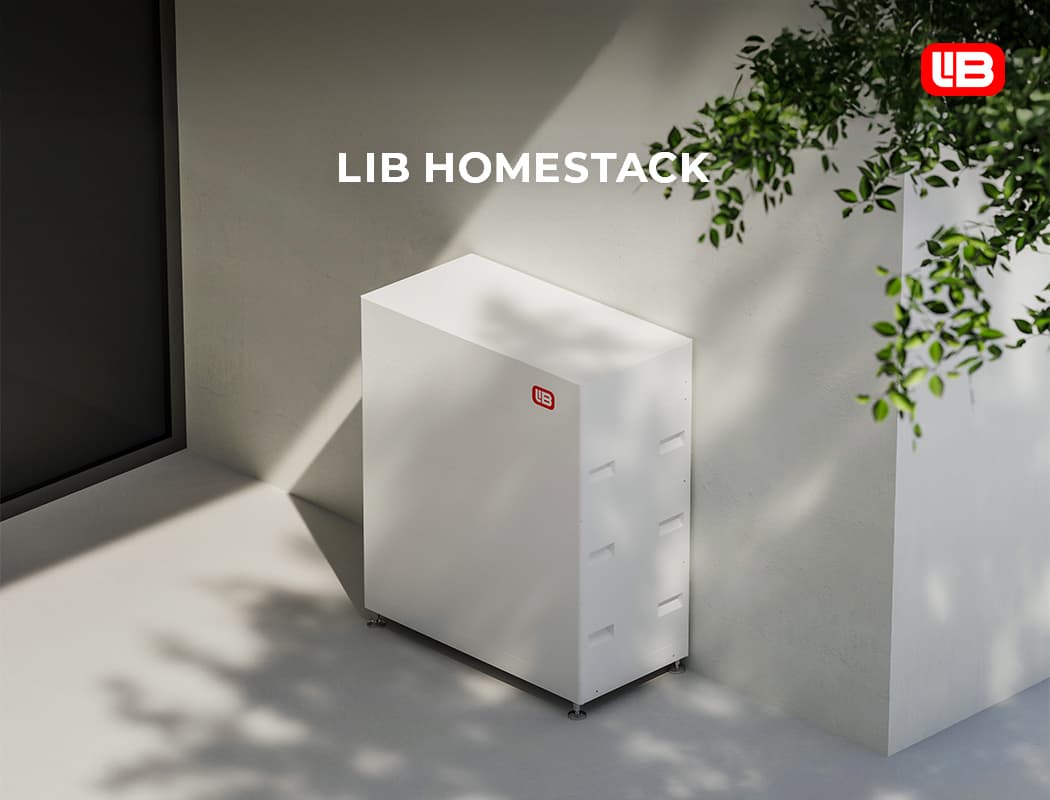
Choosing the correct battery size is one of the biggest factors in whether solar batteries are worth it for your household. A battery that is too small will not capture enough surplus energy. One that is too large means you have paid for storage capacity you do not use.
The LIB HomeStack is available in three configurations, each with 100% depth of discharge, meaning every kilowatt hour of capacity is usable:
| Spec | HomeStack I | HomeStack II | HomeStack III |
|---|---|---|---|
| Usable Capacity | 16.08 kWh | 32.15 kWh | 48.23 kWh |
| Depth of Discharge | 100% | 100% | 100% |
| Rated DC Power | 8 kW | 12 kW | 12 kW |
| Cycle Life | 8,000+ | 8,000+ | 8,000+ |
| Chemistry | LFP | LFP | LFP |
| Warranty | 10 years | 10 years | 10 years |
| CEC Approved | Yes | Yes | Yes |
HomeStack I (16.08 kWh): Best ROI for Most Homes
- Suits households of 2 to 4 people with daily consumption of 15 to 25 kWh.
- Captures the majority of surplus energy from a 5 to 8kW solar panel system.
- Covers typical evening and overnight usage with headroom for cloudy days.
- 8kW rated DC power handles standard household loads comfortably.
- For most Australian households, this size delivers the fastest payback period because it closely matches the energy gap between solar generation and evening consumption.
HomeStack II (32.15 kWh): For High-Usage Homes and EV Owners
- Ideal for larger families, electric vehicle charging, ducted air conditioning, and electric hot water systems.
- 12kW rated DC power supports simultaneous high-draw loads during peak periods.
- With 32.15 kWh of fully usable capacity, it dramatically reduces reliance on grid electricity.
- Strongest ROI when paired with larger solar systems of 8kW to 13kW.
HomeStack III (48.23 kWh): Maximum Independence
- Designed for large properties, off grid aspirations, or homes with multiple high-consumption systems.
- 48.23 kWh of usable capacity can power most large homes through an entire overnight period and into the next morning.
- Best suited for households that want to eliminate grid dependence almost entirely.
- The financial case is strongest when combined with high electricity bills, a large solar system, and the federal rebate before it tapers.
Beyond Financial Savings: The Other Reasons Solar Batteries Are Worth It
Blackout Protection
If you experience frequent power outages or live in a storm-prone area, a solar battery system provides backup power when the grid fails. Most solar batteries on the market are capable of keeping the lights on during a power outage, though some may require additional hardware. While most solar batteries can provide backup power during outages, not all batteries have this capability.
The LIB HomeStack, paired with the LIB inverter, can keep essential appliances running during outages, or with the larger configurations, power your entire home.
Energy Independence
Relying less on the grid means you are less exposed to electricity price increases and policy changes from energy retailers. A well-sized solar and battery system gives you genuine control over your power bills and your energy future.
When Solar Batteries Might Not Be Worth It
Transparency matters. Solar batteries may not make financial sense if:
- Your electricity bills are very low and your feed in tariff is still generous.
- Your solar panel system is very small and does not produce enough excess energy to justify a battery.
- You are planning to move in the next 2 to 3 years and would not benefit from the payback period.
For most Australian households with an existing solar system and average or above-average energy bills, the investment case is strong and getting stronger as electricity prices continue to rise.
Why the LIB HomeStack Is a Sound Investment
- Designed for the home. Australia's first home energy brand built exclusively for residential living.
- 100% depth of discharge. Every kWh you pay for is a kWh you can use. No hidden buffers.
- 8,000+ cycle life. LFP chemistry with 314Ah cells. Engineered for everyday use, built for years.
- Stackable and modular. Start with 16 kWh, expand to 32 or 48 kWh as your needs grow.
- Minimal design. Made to blend in around the home, not stand out. Whisper-quiet natural convection cooling.
- Layered safety. Circuit breaker per pack, automatic fire extinguishing, pressure relief, 48V low-voltage.
- CEC approved. Eligible for federal battery rebate, STCs, state rebates, and VPP programs.
- 10-year warranty. Backed by a comprehensive warranty covering capacity and cycle count.
FAQs
Are solar batteries worth it for the average Australian home in 2026?
Yes, for most Australian households with rooftop solar panels. With electricity prices continuing to rise, feed in tariffs declining, and the federal battery rebate still available, a correctly sized solar battery typically pays for itself within 5 to 8 years. After that, every year of use delivers direct savings on electricity bills. The LIB HomeStack's 8,000+ cycle life and 100% DoD maximise that long-term return.
Larger solar systems can lead to better financial returns for solar batteries by ensuring they are fully charged.
Is the federal battery rebate still available in 2026?
The federal battery rebate for solar batteries became active as of 2025 and offers around $345 per usable kWh of battery capacity installed after administrative fees are considered. State rebates for solar batteries vary across Australia, with some states offering significant incentives that can dramatically improve payback periods.
In New South Wales, customers can receive an additional rebate of up to $1,500 if they connect their battery to a Virtual Power Plant.
The Western Australian Government offers rebates of up to $3,800 for eligible households installing new, additional, or replacement battery systems.
The federal battery rebate is only available for batteries that are part of a solar panel installation; standalone batteries do not qualify for this rebate.
Can I add a battery to my existing solar system?
In most cases, yes. Whether you need a standalone battery with its own inverter or can integrate with your existing solar system depends on your current setup. The LIB HomeStack is paired with the LIB inverter as a complete system, simplifying installation. Speak with an accredited installer to assess compatibility with your existing solar system.
What size solar battery gives the best return on investment?
The best ROI comes from a battery sized to match your evening and overnight energy consumption. For most households, the LIB HomeStack I at 16.08 kWh provides the fastest payback because it closely matches the typical gap between solar generation and evening use. Larger homes or EV owners benefit from the LIB HomeStack II (32.15 kWh) or LIB HomeStack III (48.23 kWh) for greater savings.
Is Energy Independence Viable with a Solar Battery?
Solar batteries store energy generated by solar panels for later use, such as during the night or on cloudy days.
Solar batteries operate silently, require little maintenance, and provide instant backup power during grid outages. Solar batteries can help integrate more renewable energy into the grid, enhancing overall energy resilience. Batteries with backup capability can isolate a house from the grid during a blackout, providing immediate power.
Batteries with backup capability can isolate a house from the grid during a blackout, providing immediate power.