


Do Solar Batteries Work at Night? Everything Australian Homeowners Need to Know
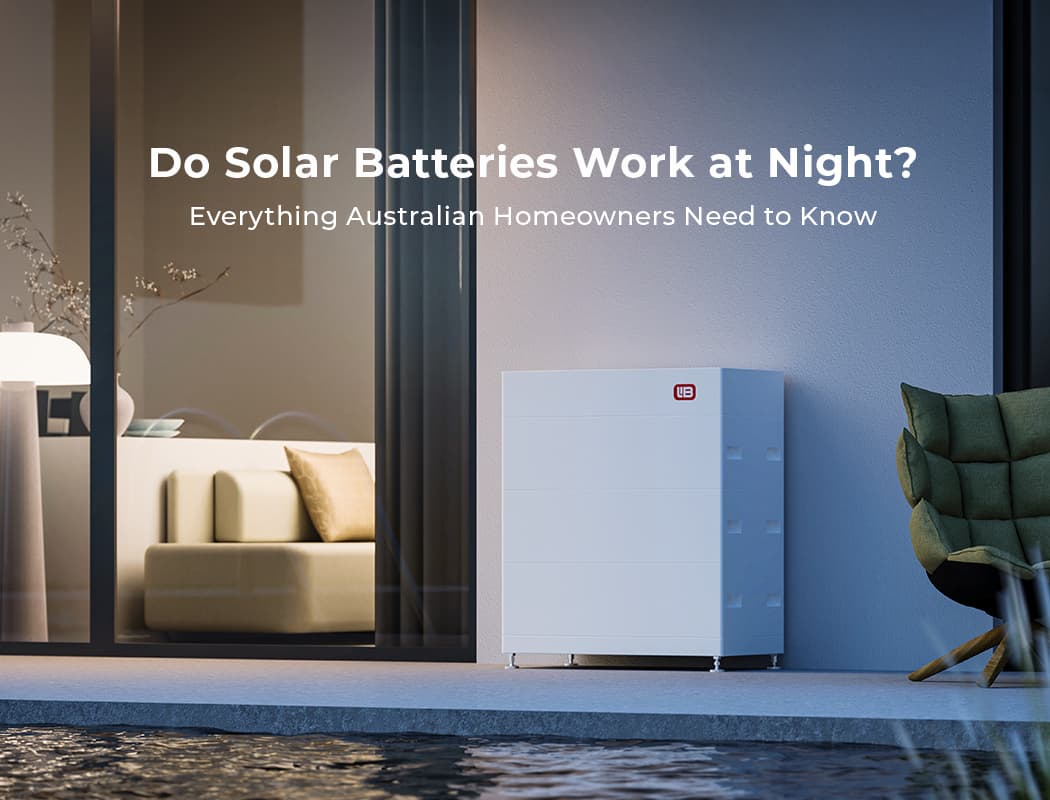
It is one of the most common questions in the solar battery space, and it has a satisfyingly simple answer: yes, solar batteries work at night and working at night is literally their primary function. Your solar panels generate electricity during daylight hours. The battery stores what your home doesn't use during the day. When the sun goes down, the battery releases stored electricity to power your home. That is the entire purpose of the system.
The more useful questions are: how long does the battery last through the night, what affects overnight performance, and how do you size a battery to make it through until sunrise? This guide answers all of them.
Quick Answer: Do Solar Batteries Work at Night?
- Quick Answer: Yes. Solar batteries store electricity generated during the day and release it at night, this is their primary function. A 16 kWh LIB HomeStack powers an average 3–4 person Sydney household through the entire night with enough headroom for the early morning peak. A 32 kWh system covers most households entirely, including EV charging.
How Solar Batteries Power Your Home at Night
During the day, your solar panels generate DC electricity. Your hybrid inverter converts this to AC electricity and routes it first to your home's appliances. Any surplus beyond your home's immediate consumption flows into the battery which is stored as chemical energy in the LFP cells. When the sun sets and your panels stop generating, the inverter automatically switches to discharging the battery. The stored electricity flows from the battery, through the inverter, and into your home's circuits exactly as grid electricity would.
How Long Does a Solar Battery Last Through the Night?
This depends on two things: your battery's usable capacity and your household's overnight electricity consumption. The table below shows typical overnight runtimes for the LIB HomeStack configurations:
| LIB HomeStack | Usable Capacity | Avg Household Load | Overnight Runtime |
|---|---|---|---|
| LIB HomeStack I | 16.08 kWh | 1.5 kW average | 10–11 hours |
| LIB HomeStack II | 32.15 kWh | 1.5 kW average | 21+ hours (full night + morning) |
| LIB HomeStack I | 16.08 kWh | 2.5 kW (AC running) | 6–7 hours |
| LIB HomeStack II | 32.15 kWh | 2.5 kW (AC running) | 12–13 hours |
At typical Australian household overnight loads of 1.5 to 2 kW average, the LIB HomeStack I (16 kWh) powers most homes through 8–10 hours of night. The LIB HomeStack II (32 kWh) covers most households entirely through the evening, overnight, and into the following morning when the solar panels begin generating again.
What Affects How Long Your Battery Lasts at Night?
Depth of Discharge
A battery that delivers 100% of its rated capacity, like the LIB HomeStack, gives you every kWh you paid for. A battery at 80% depth of discharge locks away 20% of its capacity as a buffer. This difference adds up significantly over thousands of overnight cycles and directly affects how long your battery works at night.
Overnight Temperature
LFP chemistry performs well across a wide temperature range, but batteries in very cold climates (below 0°C) or very hot installation environments can see slightly reduced overnight performance. The LIB HomeStack is IP65 weatherproof and rated for outdoor installation across Australian climates. In the Australian context, heat and not cold is the primary consideration, and LFP handles Australian summer temperatures significantly better than NMC chemistry.
Appliances Running Overnight
A solar battery works at night against whatever load your household draws. A household running ducted air conditioning overnight at 3–4 kW will drain a 16 kWh battery in 4–5 hours. The same household on a cool night with only the fridge, lights, and phone charging (0.8–1 kW) will run through more than 16 hours. Understanding your overnight load profile is key to sizing the right battery.
What Happens When the Battery Runs Out at Night?
When your solar battery depletes overnight, your home automatically draws from the grid, seamlessly and without any action from you. The grid acts as the ultimate backup. The hybrid inverter manages the transition from battery to grid at the same millisecond speed as the transition from solar to battery with no lights flickering, no appliances reset.
FAQs
Do solar panels work at night?
No, solar panels require sunlight to generate electricity and produce nothing at night. This is exactly why solar batteries exist. The battery stores the electricity your panels generate during the day and releases it at night, effectively extending your solar self-sufficiency around the clock.
What is the best solar battery for overnight use?
For overnight use, prioritise usable capacity, depth of discharge, and battery chemistry. The LIB HomeStack delivers 100% depth of discharge, meaning every rated kWh is available for overnight use. LFP chemistry handles the repeated deep cycling that nightly discharge requires better than NMC chemistry. For most households, the LIB HomeStack II (32 kWh) provides enough capacity to power the home entirely from solar through the night and into the following morning.
Can a solar battery power my whole house overnight?
Yes, if the battery is appropriately sized. The LIB HomeStack II (32 kWh) covers the overnight consumption of most Australian households entirely when running standard loads. For households with significant overnight loads like ducted AC, overnight EV charging, or pool pumps, the LIB HomeStack III (48 kWh) is the right configuration for whole-house overnight coverage.
- Power Your Home Through the Night with the LIB HomeStack
- 100% DoD. Every kWh stored during the day is a kWh available at night. 16, 32, or 48 kWh. Modular and expandable. Start small, scale when you're ready.
- Powers most homes through the entire night.
- 100% DoD — no hidden buffers reducing your overnight capacity.
- LFP chemistry rated for 8,000+ cycles.