


Energy Independence Australia: How Home Batteries Free You from the Grid
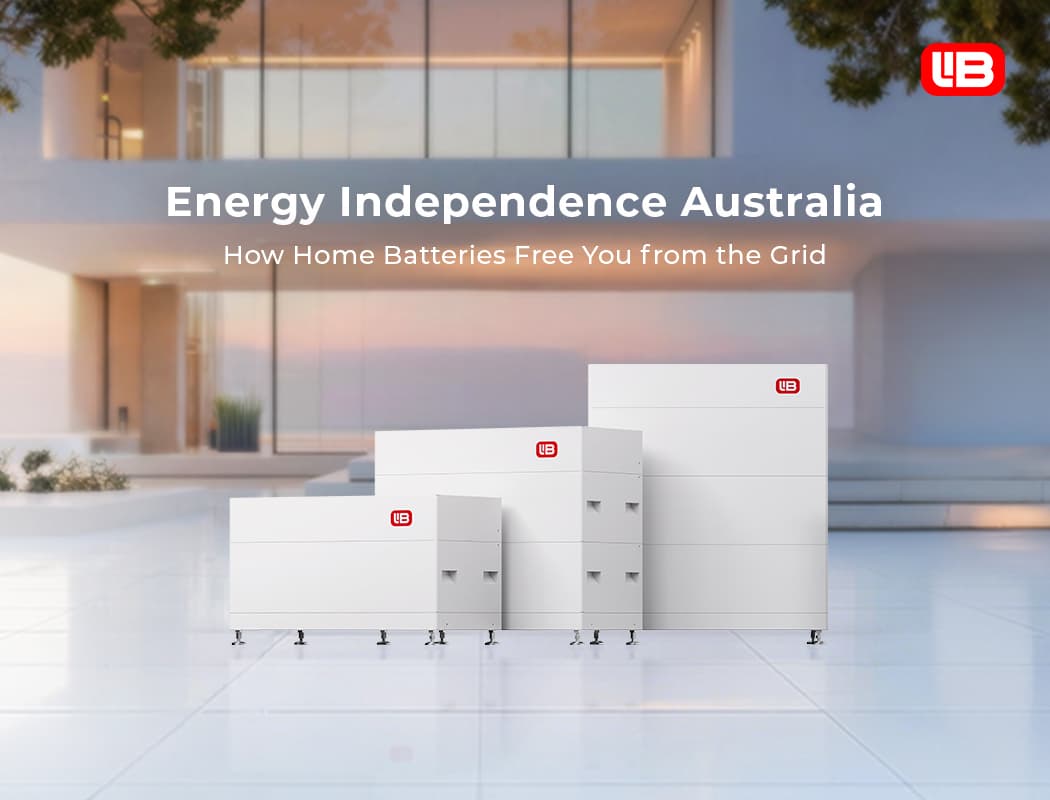
For most of Australia's history, energy independence at the household level was a concept reserved for remote properties and off-grid farms. The economics of the electricity grid made self-sufficiency impractical for suburban homes. In 2026, that has fundamentally changed. The combination of rooftop solar, home battery storage, and the forthcoming free overnight charging policy is making meaningful energy independence achievable for ordinary Australian households as a financially sensible decision.
This guide explains what energy independence actually looks like for an Australian home, what percentage of grid electricity you can realistically replace, and how the LIB HomeStack positions you to maximise self-sufficiency in 2026 and beyond.
Quick Answer: What Does Energy Independence Mean for an Australian Home?
Quick Answer: Energy independence for an Australian household means generating and storing enough electricity from your rooftop solar and home battery to cover the majority of your annual consumption, reducing grid electricity purchases to a safety-net top-up rather than a primary energy source. A well-sized solar and LIB HomeStack combination can achieve 70–90% self-sufficiency for most Australian homes.
The Three Layers of Energy Independence
Layer 1: Rooftop Solar — Daytime Self-Sufficiency
Rooftop solar panels are the foundation of energy independence. During daylight hours, a well-sized solar system covers the majority of household consumption for free, eliminating daytime grid costs entirely. A 6.6 kW system in Sydney generates approximately 25–28 kWh on a clear day. A 10 kW system generates 38–42 kWh. Without battery storage, all of that generation beyond immediate household use exports to the grid for a few cents.
Layer 2: Battery Storage — Evening and Overnight Self-Sufficiency
A home battery captures the daytime solar surplus and delivers it in the evening and overnight, extending your solar self-sufficiency past sunset. A 16 kWh battery covers most of the evening and overnight consumption for a 2–3 person household. A 32 kWh battery covers it entirely for most households, with enough headroom for EV charging and peak appliance use.
Layer 3: Free Government Charging — Grid as a Resource, Not a Dependency
The forthcoming government policy allowing battery owners to access approximately 3 hours of free overnight grid charging shifts the relationship with the grid from dependency to selective use. Battery owners use the grid strategically, charging for free overnight and discharging at peak pricing times. This turns energy independence into an active financial strategy, not just a passive cost avoidance measure.
What Self-Sufficiency Percentage Can You Realistically Achieve?
| Configuration | Solar System | Annual Self-Sufficiency | Notes |
|---|---|---|---|
| Solar panels only (no battery) | 6.6 kW | 25–35% | Good during day. Grid dependent at night. |
| Solar + LIB HomeStack I (16 kWh) | 6.6 kW | 55–70% | Strong for moderate households. |
| Solar + LIB HomeStack II (32 kWh) | 10 kW | 60–80% | Near energy independence for most homes. |
| Solar + LIB HomeStack II + free charging | 10 kW | 70–80% | Free overnight charging fills the gap. |
| Solar + LIB HomeStack III (48 kWh) | 10 kW+ | 70–90% | Maximum residential self-sufficiency. |
True 100% energy independence requires a very large battery, which is not cost-effective for suburban households. The sweet spot for most Australian homes is 70–90% self-sufficiency through a combination of solar and a 32-48 kWh battery, achieving effective energy independence at peak pricing periods while using the grid as an occasional top-up.
Energy Independence and Electricity Price Inflation
One of the most compelling aspects of pursuing energy independence in Australia is that the value of your self-sufficiency grows every year without any change in your system. As grid electricity prices rise, and they have risen over 20% in two years, each kWh you generate and store yourself becomes more valuable. A battery purchased today will save more per year in 2028 than it does in 2026, automatically.
FAQs
Can a home battery make my house energy independent?
A home battery combined with rooftop solar panels can achieve 70–90% energy independence for most Australian households, meaning 70–90% of annual electricity consumption comes from solar generation and stored solar energy rather than the grid. Full 100% independence requires a very large battery, which is not cost-effective for most suburban homes. 70–90% delivers strong bill savings and meaningful resilience without the complexity of full off-grid.
How big does a battery need to be for energy independence?
For most Australian homes, a 32 kWh battery combined with a 10 kW solar system delivers 60–80% annual self-sufficiency. Adding the forthcoming free overnight charging policy pushes this to 70–80%. The LIB HomeStack's modular design lets you start at 16 kWh and expand to 32 or 48 kWh when your energy independence goals grow.
Is energy independence worth the investment in Australia?
Yes, and increasingly so. At current electricity prices, a solar and battery combination that achieves 80% self-sufficiency saves $2,500–$4,500 per year for a typical Sydney or Adelaide household. That saving grows every year as grid electricity prices rise. The investment also provides blackout protection and positions you to benefit fully from the forthcoming free government overnight charging policy.
Achieve Real Energy Independence with the LIB HomeStack from EnergyLIB
70–90% self-sufficiency. Rooftop solar plus 16, 32, or 48 kWh LFP storage. Modular and expandable. Ready for the government free charging policy. Installed by Autra Batteries Australia.
☀️ 70–90% annual self-sufficiency achievable.
🔋 Modular — start at 16 kWh, grow to 48 kWh.
✅ Returns improve every year as electricity prices rise.