


EnergyLIB Australia | Blog Page Content | July 2026
Low-Voltage Solar Battery Systems // BLOG PAGE Content // EnergyLIB
Low-Voltage Solar Battery Systems: Safer Residential Storage for Installers and Homeowners
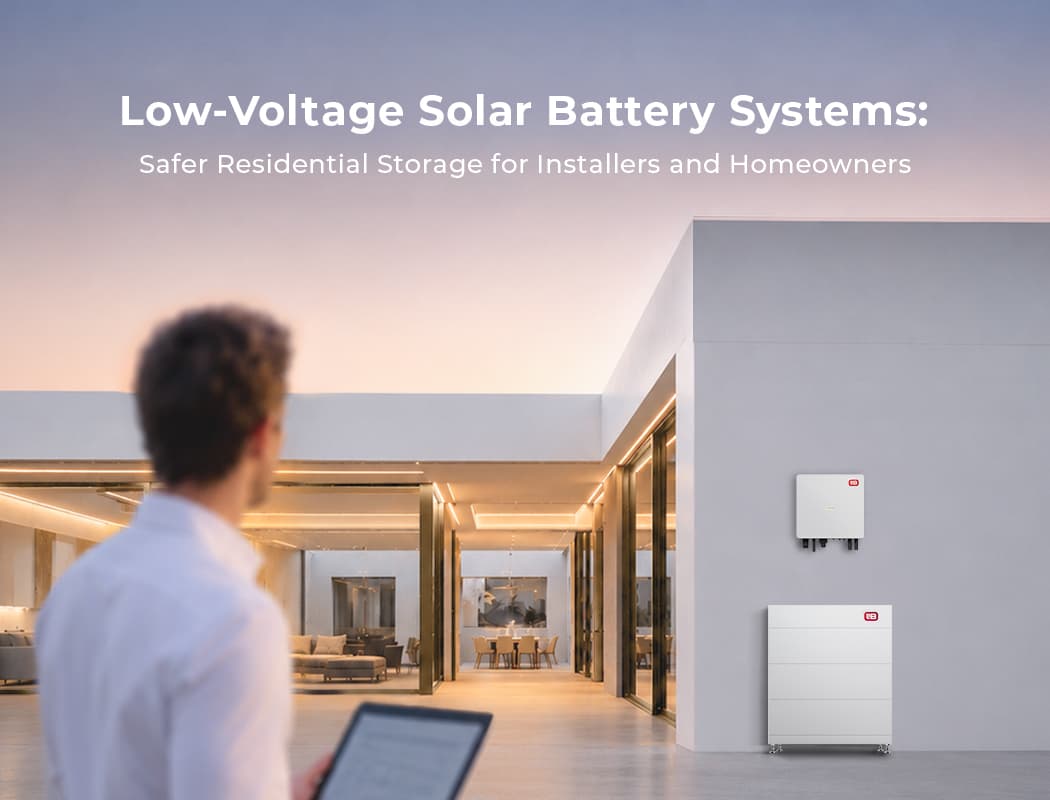
For solar installers, retailers, dealers and battery distributors in Australia, home battery storage is no longer a small add-on to a solar package. It is becoming a core part of the residential energy conversation. Homeowners are asking how they can use more of their own solar power, reduce grid reliance, prepare for higher electricity use and add backup capability where the system is designed for it.
But before homeowners commit to a battery, they usually need confidence in one thing first: safety. A battery is not a small appliance. It becomes part of the home energy system. It may be installed beside a garage, on an exterior wall, in a service area or near a family living space. That means installers and dealers need a product story that is not only about price and capacity, but also about residential suitability.
A low-voltage solar battery system gives solar businesses a clear way to discuss safer home storage. It helps installers explain that the battery is designed for residential use, while also connecting to other practical benefits such as LFP chemistry, outdoor-ready protection, modular capacity and long-term daily operation.
For EnergyLIB, this is an important B2B advantage. LIB HomeStack is positioned as a home-first battery system with a low-voltage design, safe LFP chemistry, 100% usable energy, IP65 protection and modular 16 kWh, 32 kWh and 48 kWh options. This article explains why low-voltage battery systems matter for Australian installers, how to explain them to homeowners and how solar businesses can use the low-voltage message to create stronger sales conversations.
Quick Answer: Why Do Low-Voltage Solar Battery Systems Matter?
| Quick Answer |
|---|
| Low-voltage solar battery systems are important because they help installers and dealers position home battery storage around residential safety, easier homeowner understanding and practical installation. A low-voltage system should not be described as risk-free, but it can be positioned as a safety-focused design approach when combined with accredited installation, LFP chemistry, IP65 protection and clear system documentation. |
What Is a Low-Voltage Solar Battery System?
A low-voltage solar battery system is a home energy storage system that operates at a lower battery voltage range compared with high-voltage battery systems. In simple language, voltage is the electrical pressure that moves energy through a system. Higher-voltage systems can be appropriate in some applications, but residential buyers often respond better to systems that are easy to explain, easy to place in the home environment and clearly designed around safety.
For B2B sales, the most important point is balance. Low voltage does not mean there is no risk. Any battery system still needs correct design, installation, siting and commissioning by qualified professionals. The stronger message is that a low-voltage system is designed to reduce certain electrical risks and support safer residential energy storage when installed correctly.
This makes low voltage a practical sales and education advantage. Installers can explain it without overwhelming homeowners with technical numbers. Dealers can position it as part of a wider safety story. Distributors can use it to differentiate EnergyLIB from generic battery products that only compete on price.
Why Low-Voltage Design Matters for Australian Installers
1. It Makes the Safety Conversation Easier
Many homeowners are interested in batteries but are not always comfortable with technical electrical language. A simple message such as 'low-voltage system designed to reduce electrical risks' is easier to understand than a detailed engineering explanation. It gives installers a clear and homeowner-friendly way to address safety concerns at the start of the conversation.
2. It Helps Move the Sale Beyond Price
If installers only sell on price, the battery category becomes a race to the bottom. Low-voltage design helps move the conversation toward value: safety, system quality, installation confidence, product suitability and long-term support. This is especially useful for solar businesses that want to sell premium residential energy storage instead of commodity battery hardware.
3. It Supports Residential Installation Positioning
Home batteries are installed in real homes, not showrooms. They need to suit garages, exterior walls, side passages, patios and modern residential facades. Low-voltage design, a clean enclosure, IP65 protection and compact modular form all help make the system feel appropriate for a home environment.
4. It Gives Dealers a Stronger Differentiation Point
Many homeowners struggle to compare battery brands because every brand claims savings, backup and smart energy management. Low-voltage residential design gives dealers and retailers a more concrete point of difference. It connects directly to one of the homeowner's biggest concerns: whether the battery is suitable for the home.
EnergyLIB Product Benefits That Support the Low-Voltage
Low voltage is not the whole product story. It becomes more powerful when it is connected to the full EnergyLIB benefit stack. For installers and dealers, the goal is to explain the product in a way that is simple enough for homeowners but strong enough for a professional sales process.
| EnergyLIB Feature | Homeowner Benefit | Installer / Dealer Sales Angle |
|---|---|---|
| Low-voltage system | Designed to reduce certain electrical risks for residential storage. | A clear safety-focused message for homeowner conversations. |
| LFP chemistry | Stable battery chemistry suitable for home energy storage. | Supports trust and premium positioning beyond price. |
| 314Ah LFP cells | Product-level technology story that supports durability and performance. | Useful for B2B product training and technical sales support. |
| 100% usable energy | More of the battery capacity is available for the home to use. | Helps compare useful capacity, not just headline kWh. |
| IP65 protection | Durable enclosure for suitable outdoor operation. | Supports flexible installation placement around Australian homes. |
| Modular 16/32/48 kWh options | Storage can be matched to different household energy profiles. | Makes it easier to build standard, larger and high-usage packages. |
| Long daily-use lifespan | Designed for repeated daily solar storage over the long term. | Positions LIB HomeStack as an everyday energy system, not occasional backup only. |
For EnergyLIB, the advantage is the full residential package: low-voltage design, LFP chemistry, IP65 protection, modular battery sizes and clean home-first aesthetics. The value is not one feature by itself. The value is that the system is designed and positioned for the home battery category.
FAQs
What is a low-voltage solar battery system?
A low-voltage solar battery system is a home battery system designed to operate at a lower battery voltage range than high-voltage alternatives. It is often positioned as a residential-friendly option.
Are low-voltage solar batteries safer?
Low-voltage systems can be designed to reduce certain electrical risks, but no battery system should be described as risk-free. Safety depends on product design, battery chemistry, siting, installation quality, accreditation and correct system commissioning.
Why does low voltage matter for solar installers?
Low voltage gives installers a simple and credible safety-focused message for homeowners. It helps position the battery as suitable for residential storage and can make the sales conversation easier.
Is LIB HomeStack a low-voltage battery system?
LIB HomeStack is a low-voltage home battery system designed for everyday living.
What other safety benefits does EnergyLIB offer?
EnergyLIB product benefits include LFP chemistry, cell-level Monitoring, 314Ah LFP battery cells, low-voltage design, IP65 protection and a home-first modular product design.
What sizes does EnergyLIB offer for residential storage?
EnergyLIB offers modular home battery options including 16 kWh, 32 kWh and 48 kWh configurations, helping partners match storage capacity to different household needs.
Can low-voltage batteries be installed outdoors?
Some home battery systems are designed for outdoor operation. EnergyLIB highlights IP65 protection, but the final installation location should always be assessed by a qualified installer.
Do Australian battery installations need accredited installers?
Yes. Eligible solar battery installations must follow relevant laws, Australian standards and accreditation or supervision requirements. Installers should always confirm current program and product requirements before installation.
Why should dealers partner with EnergyLIB?
EnergyLIB gives dealers protected margins, competitive wholesale rates, local Australian support, strong brand credibility, and premium product advantages including low-voltage design, LFP chemistry, IP65 protection, 100% DoD, and modular 16–48kWh capacity.