


Solar Battery Pros and Cons: What Australian Homeowners Need to Know in 2026
The decision to add battery storage to your home is not a small one. A quality solar battery system is a 10 to 20 year financial and energy commitment. Done well, it significantly reduces electricity costs, delivers energy independence from the electricity grid, and protects your household during a power outage. Done without the right information, it can underdeliver on expectations and extend your payback period unnecessarily.
This guide gives you every solar battery pros and cons consideration that matters for Australian homeowners in 2026. We cover the genuine benefits, the real limitations, the federal battery rebate landscape, and how to determine whether the numbers stack up for your specific solar system and electricity usage. At EnergyLIB, we're Australia's first home energy brand designed exclusively for the home. Our view is that an informed customer makes the best customer, so here is the unvarnished picture.
Quick Answer: Solar Battery Pros and Cons
- PROS: Reduced electricity bills, energy independence, backup power during outages, environmental benefits, federal battery rebate up to $15,000, VPP revenue, lower long-term energy costs.
- CONS: High upfront costs, limited storage capacity for larger households, payback period of 4–8 years, battery degradation over time, installation costs vary depending on existing solar setup.
- Verdict: For most Australian households with rooftop solar panels, the pros outweigh the cons in 2026.
Solar Battery Pros and Cons at a Glance
| ✅ PROS of Solar Batteries | CONS of Solar Batteries |
|---|---|
| Significantly reduce electricity costs by storing excess solar energy | High upfront costs — $10,000 to $18,000 fully installed before rebate |
| Energy independence from the electricity grid | Limited storage capacity — one battery may not cover all night-time load |
| Backup power during a power outage | Battery capacity degrades over time with each charge cycle |
| Reduce greenhouse gas emissions by avoiding fossil fuel generated electricity | Payback period of 4 to 8 years depending on system and usage |
| Federal battery rebate reduces upfront cost by 25–30% | Not all battery systems include whole house power backup by default |
| Virtual power plant (VPP) revenue adds ongoing income | Installation costs vary depending on existing solar system compatibility |
| Lower electricity bills and energy bills over the battery's life | Most solar batteries require lithium ion chemistry with careful management |
| Supports renewable energy transition and reduces fossil fuels dependence | Replacement cost applies at end of warranty period |
| Increases peak demand self-consumption rather than grid export | Some battery brands have limited local installer support in Australia |
Are Solar Batteries Worth It in Australia in 2026?
The answer depends on four factors: your existing solar system or existing solar panel system size, your electricity usage and energy bills, the battery cost after rebates in your state, and your goals which can be primarily financial (reducing electricity bills), resilience (backup power), or environmental (reducing greenhouse gas emissions).
| Household Type | Verdict | Reasoning |
|---|---|---|
| 3–4 person home, 5–6.6 kW solar, avg electricity bill $250–$350/qtr | Strong YES | Payback 4–5 years. Excellent battery savings. Suits 16 kWh system. |
| Large home, 10 kW+ solar, bill $400+/qtr, EV or pool pump | Strong YES — go large | 32–48 kWh system. Lowest net cost per kWh after rebate. Sub-3 year payback possible. |
| Average home, no existing solar, starting fresh | YES — solar + battery together | Install solar panels and battery together for lower total installation costs. |
| Small home, 1–2 persons, low electricity bills, minimal solar | Consider carefully | Payback may be 7–9 years. 10 kWh battery may be more appropriate than 16 kWh. |
| Perth home on flat Synergy tariff with no solar | Assess first | Lower electricity costs reduce battery savings. Full solar + battery assessment needed. |
For the majority of Australian homeowners with rooftop solar panels already installed, adding battery storage in 2026 is a smart investment.
The LIB HomeStack: Addressing the Cons Directly
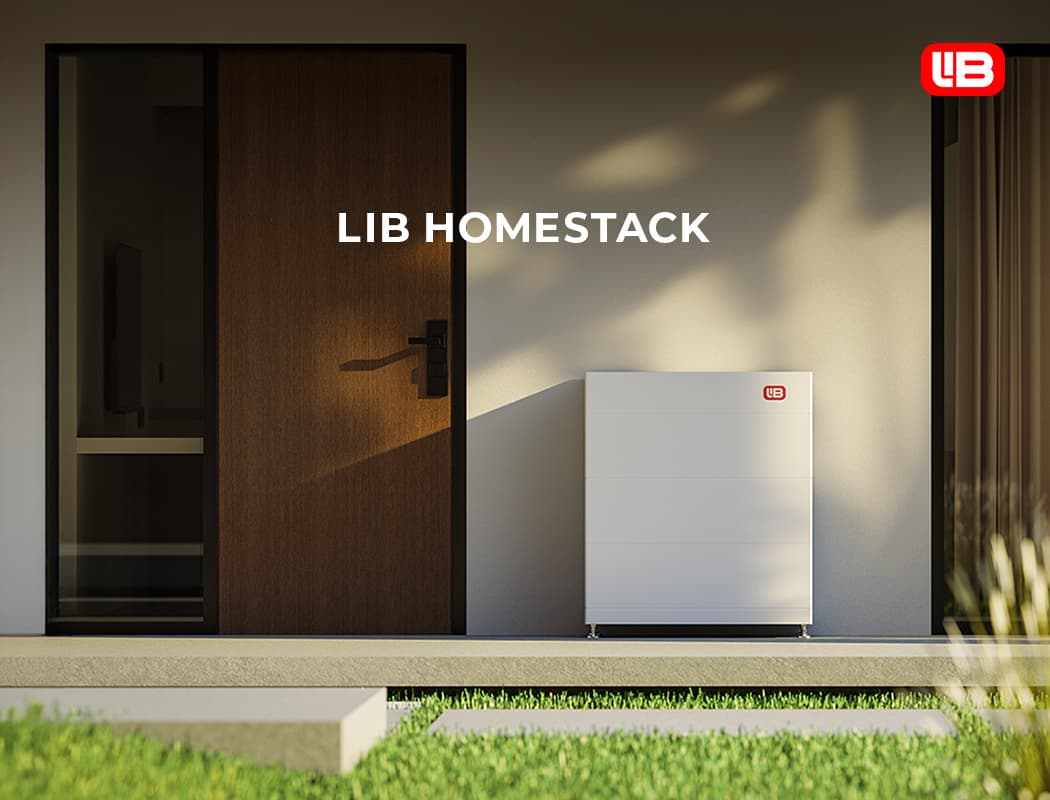
Every pro and con in this guide is genuine and applies to the market broadly. Here is how the LIB HomeStack from EnergyLIB is specifically engineered to address the main cons of solar battery ownership:
| The Con | How LIB HomeStack Addresses It |
|---|---|
| High upfront costs | Launch bundle from $4,999 including hybrid inverter. Net ~$6,000 after federal rebate. Lowest net cost per kWh in its class. |
| Limited storage capacity | 16, 32, and 48 kWh configurations. Flexible capacity — expandable as energy needs grow. |
| Battery degradation | 8,000+ cycle LFP chemistry. 10-year warranty with 70%+ capacity retention guarantee. |
| Payback period | ~4 years for LIB HomeStack I at current rebate rates. Sub-3 years for LIB HomeStack III for large homes. |
| Installation complexity | Autra Batteries Australia handles full installation, STC rebate claim, and inverter supply. One-stop solution. |
| No whole house backup by default | LIB hybrid inverter supports whole house power backup configuration. Specify at installation. |
| Battery management | Integrated BMS monitors every cell in real time. IP65 rated. Natural convection cooling — no fans or moving parts. |
Making the Decision: Questions to Ask Before Installing a Solar Battery
If the solar battery pros and cons analysis in this guide has you leaning toward installing battery storage, these are the practical questions to resolve before committing:
| Question | Why It Matters |
|---|---|
| What size battery do I actually need? | Size the solar battery to your real electricity usage, not a round number. Over-sizing wastes upfront cost; under-sizing limits battery savings. |
| Is my existing solar system large enough to fill the battery? | A 3 kW solar panel system cannot reliably fill a 16 kWh battery in winter. Match battery storage to solar generation. |
| Is the federal battery rebate included in the quote? | Should reduce your upfront cost at point of sale, not be a separate claim process. |
| Do I want backup power / whole house power backup? | Configure at installation. Retrofitting backup power costs significantly more later. |
| What is my realistic payback period at my electricity costs? | Use your actual electricity bills and local grid tariff, not national averages. |
| Is the battery on the CEC approved product list? | Required for the federal battery rebate. Non-CEC batteries are not eligible. |
| Can I join a VPP for additional income? | Virtual power plant revenue of $100–$400/year reduces effective payback period. |
| What happens at the end of the warranty period? | Understand battery replacement cost and whether the system is modular or requires full replacement. |
The Bottom Line on Solar Battery Pros and Cons
The solar battery pros and cons balance in Australia in 2026 is the most favourable it has ever been. The environmental benefits and energy independence from grid electricity and fossil fuel generated electricity add further dimensions that go beyond the financial calculation.
The federal battery rebate tapers from 1 May 2026. Every week closer to that date reduces the government incentives available on your solar battery purchase. If the solar battery pros and cons analysis in this guide makes sense for your existing solar panel system and energy needs, the logical next step is a site assessment and personalised quote from an accredited installer, so you can run the numbers on your specific home, not a national average.
FAQs
What are the main pros of solar batteries in Australia?
The main pros of solar batteries in Australia in 2026 are: significantly reduced electricity bills by storing excess solar energy for night time usage instead of buying from the grid; increased energy independence from energy retailers and grid power; backup power during a power outage; reduced greenhouse gas emissions by displacing fossil fuel generated electricity; the federal battery rebate reducing upfront cost by 25 to 30%.
Solar batteries allow homeowners to store excess energy generated during the day for use at night or during power outages, significantly increasing energy independence.
What are the main cons of solar batteries?
The main cons of solar batteries are: high upfront costs of $10,000 to $18,000 fully installed before the battery rebate; a payback period of 4 to 8 years depending on electricity costs and electricity usage; limited storage capacity for high-consumption households; gradual battery capacity degradation over the warranty period; installation costs that vary depending on your existing solar system compatibility; and the fact that most solar batteries do not include whole house power backup by default.
Lead-acid batteries generally have a shorter lifespan compared to lithium-ion batteries, often requiring replacement every 5 to 7 years due to faster degradation.
Are solar batteries worth it in Australia in 2026?
For most Australian households with solar panels and quarterly electricity bills above $200, solar batteries are worth it in 2026.
Combined with record-high electricity costs and record-low excess solar feed-in tariffs, the payback period for a well-sized home battery storage system is 4 to 6 years for most households which is well within the warranty period of quality home solar batteries. The answer becomes less clear for low-consumption households or those in states with subsidised grid electricity rates.
The average installed cost of residential solar batteries in Australia ranges from $800 to $1,300 per usable kWh, depending on brand, size, and location.
What is the best solar battery chemistry for Australia?
Lithium iron phosphate (LFP) is the best solar battery chemistry for Australian residential battery storage in 2026. LFP offers 8,000+ cycle life compared to 3,000 to 5,000 for NMC lithium ion batteries, better thermal stability in Australian heat, and comparable or better energy storage capacity per cycle.
Most lithium-ion batteries come with a warranty of 10 years, during which their capacity gradually diminishes, typically retaining about 60-80% of their original capacity by the end of the warranty period.
Most solar batteries from reputable brands, including the LIB HomeStack, now use LFP cells. Flow batteries offer unlimited cycle life but remain too expensive and physically large for residential solar battery storage at current battery prices.
Proper maintenance of solar batteries is crucial for optimal performance, which includes following manufacturer guidelines for ventilation, firmware updates, and monitoring. Modern lithium-ion batteries are generally safe, but they require proper installation and monitoring to mitigate risks associated with electrical hazards and potential fire hazards.
How much can a solar battery save on electricity bills?
A well-sized solar battery can significantly reduce electricity costs by $900 to $3,000 per year depending on battery capacity, electricity usage), and your local grid tariff. For a household shifting 12 kWh per day from the grid to stored solar energy at a net saving of $0.30 per kWh (grid rate minus feed-in tariff), annual battery savings are approximately $1,314.
Larger battery systems in the 32 to 48 kWh range shift more how much energy and deliver proportionally greater reductions in electricity bills and energy bills. Virtual power plant participation adds a further $100 to $400 per year on top of battery savings from self-consumption.
Solar batteries are most beneficial when feed-in tariffs are low and peak electricity rates are high, making energy storage more advantageous than selling energy back to the grid.
In 2025, the Federal Government launched a national battery rebate program, reducing the typical payback period for residential systems from over 10 years to about 8 years.
- Ready to Make the Pros Work for Your Home? The LIB HomeStack from EnergyLIB is engineered to maximise every pro and minimise every con in this guide. LFP chemistry, 100% DoD, 8,000+ cycle life, whole house backup capability, and a launch bundle that includes the hybrid inverter. Book a site assessment through Autra Batteries Australia to lock in the federal rebate at its maximum value.
- Australia's first home energy brand built exclusively for the home.
- Launch bundle from $4,999 (battery + hybrid inverter). Net installed ~$5,000 after federal rebate.
- 100% DoD. 8,000+ cycle LFP chemistry. Lithium iron phosphate rated for Australian conditions.
- Whole house power backup supported. Battery management system included.
- Three sizes: 16, 32, or 48 kWh. Flexible capacity — expandable as energy needs grow.
- CEC approved. Federal rebate, and state rebates.