


Solar Battery Rebate in Australia 2026: The Complete Guide for Homeowners
Australians have more rooftop solar per capita than anywhere else on earth.
We have put panels on everything: houses, sheds, and carports. But until recently, storing that solar energy meant paying full price for a battery out of your own pocket.
That changed in July 2025 when the Australian Government launched the Cheaper Home Batteries Program, delivering around a 30% discount on eligible battery systems. Since then, over 160,000 batteries have been installed across the country.
The program has been so popular that the government expanded it from $2.3 billion to an estimated $7.2 billion, with a target of 2 million batteries by 2030.
But here is the part that matters right now: from 1 May 2026, the rebate structure changes. From 1 May 2026, the rebate for solar batteries will decrease to around $244 per usable kWh and will continue to decrease every six months thereafter. The discount tapers for larger systems, and the STC factor drops.
If you have been thinking about battery storage, the window for maximum savings is closing. The federal solar battery rebate is set to decrease every six months starting July 2025, so early adopters will receive higher discounts.
At EnergyLIB, we are Australia’s first home energy brand designed exclusively for the home. All three LIB HomeStack models are CEC approved and eligible for the federal battery rebate and state programs. This guide explains exactly what rebates are available, how to claim them, and how the new tapering rules affect your decision.
Quick Summary: Solar Battery Rebates in 2026
- Federal Cheaper Home Batteries Program: ~30% discount on eligible battery systems via Small-scale Technology Certificates (STCs).
- Available to: Australian households, small businesses, and community organisations with new or existing rooftop solar.
- Battery size: 5 kWh to 100 kWh nominal capacity. First 50 kWh of usable capacity eligible for STCs.
- From 1 May 2026: STC factor reduces and tapering applies to larger systems. Install before May for maximum discount.
- State programs: VPP incentives in NSW, interest free loans in ACT, rebates for Horizon Power customers in WA, and more.
- LIB HomeStack: All three models (16, 32, 48 kWh) are CEC approved and eligible.
The Federal Cheaper Home Batteries Program: How It Works
The Cheaper Home Batteries Program is the single biggest battery incentive available to Australian households. It works through the Small-scale Renewable Energy Scheme (SRES), the same framework that has supported rooftop solar for years and is designed to support battery installations through government policies and financial incentives.
The Clean Energy Regulator oversees the administration of the Cheaper Home Batteries Program, ensuring compliance with renewable energy laws and consumer protection.
When you install an eligible battery, the system generates small scale technology certificates (STCs) based on its usable capacity. These STCs are typically assigned to your retailer or installer, who applies the discount directly to your upfront cost.
The federal solar battery rebate is applied as an upfront discount on the final invoice by an accredited installer. The STC system supports battery installations by allowing installers to trade certificates generated by the battery’s capacity, passing the savings to consumers as an upfront discount. You do not need to trade the certificates yourself.
Current Discount (Before 1 May 2026)
- The STC factor is 8.4 per usable kWh of battery capacity.
- At current STC trading values, this equates to approximately $300 to $340 per usable kilowatt hour in upfront savings.
- The full STC factor applies to all usable capacity up to 50 kWh.
How the Tapering Affects Each LIB HomeStack Size
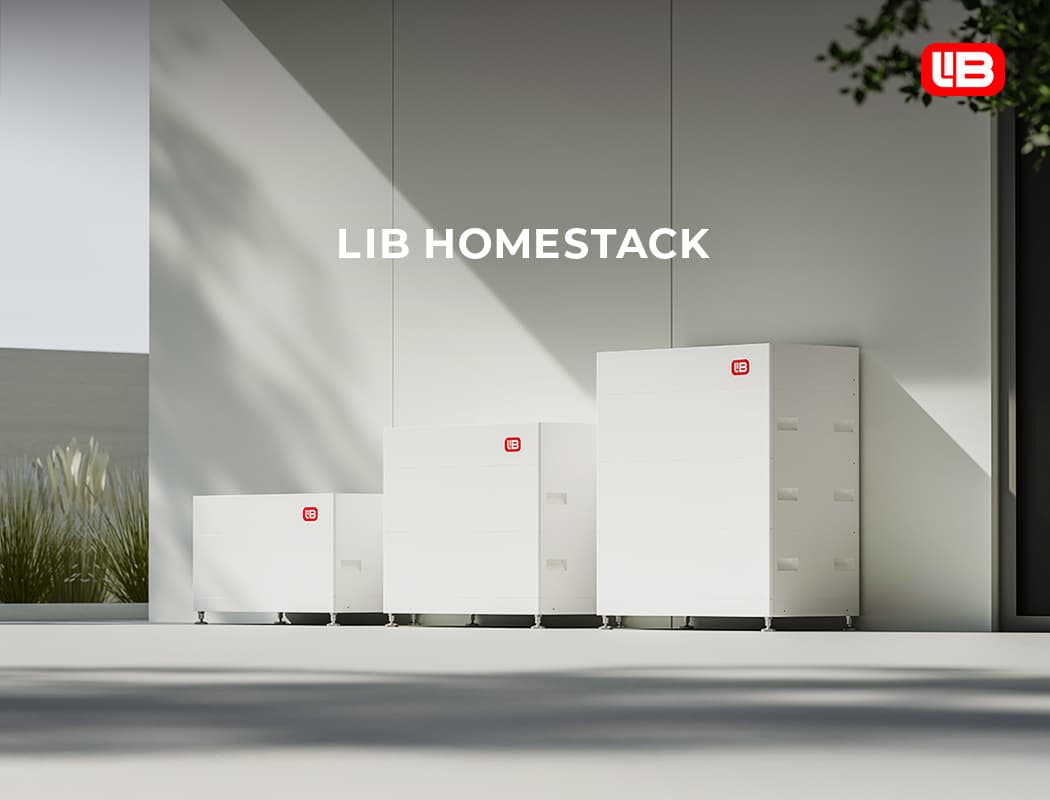
The new tapering rules mean that battery size directly affects how much rebate you receive per kWh. From May 1, 2026, the rebate will switch to a tiered system that provides varying rates based on battery capacity installed (system size).
Under the tiered rebate structure effective May 1, 2026, batteries from 0-14 kWh receive 100% of the rebate, 14-28 kWh receive 60%, and 28-50 kWh receive 15% of the rebate. Here is how it plays out for each LIB HomeStack configuration:
LIB HomeStack I (16.08 kWh): Strongest Rebate per kWh
- Before May 1st: the full STC factor applies to all 16.08 kWh. Maximum discount.
- After May 1st: the first 14 kWh receives the full factor. The remaining 2.08 kWh receives 60%. Still a strong rebate overall.
- This is ideal. The tapering barely touches the LIB HomeStack I, making it the most cost effective option under the new rules.
LIB HomeStack II (32.15 kWh): Moderate Tapering
- Before May 1st: the full STC factor applies to all 32.15 kWh. Install now for maximum savings.
- After May 1st: 14 kWh at 100%, the next 14 kWh at 60%, and the remaining 4.15 kWh at 15%.
- Still a significant rebate with the LIB HomeStack II, but the per-kWh value is notably lower than pre-May installation.
LIB HomeStack III (48.23 kWh): Largest Impact from Tapering
- Before May 1st: the full STC factor applies to all 48.23 kWh. This is the largest absolute saving.
- After May 1st: 14 kWh at 100%, 14 kWh at 60%, and 20.23 kWh at 15%.
- The difference between installing before and after May 1st is most significant for the LIB HomeStack III. If you are considering the largest configuration, acting before the deadline delivers the greatest financial benefit.
Estimated Savings: Before vs. After 1 May 2026
- LIB HomeStack I (16.08 kWh): Before May: ~$5,000 to $5,400 in STCs. After May: ~$4,200 to $4,600. Difference: ~$800.
- LIB HomeStack II (32.15 kWh): Before May: ~$10,000 to $10,800. After May: ~$6,500 to $7,200. Difference: ~$3,500.
- LIB HomeStack III (48.23 kWh): Before May: ~$15,000 to $16,200. After May: ~$7,500 to $8,500. Difference: ~$7,500+.
- Note: Exact figures depend on STC trading values at time of installation. These are estimates based on current market rates.
State and Territory Battery Rebates and Incentives
In addition to the federal program, several state and territory governments offer their own battery incentives. These can often be stacked with the federal rebate. State-specific rebates in Australia, such as those in Western Australia and New South Wales, can be combined with the federal rebate for additional savings.
In South Australia, the Retailer Energy Productivity Scheme (REPS) is a government initiative focused on improving energy efficiency for households and businesses, offering incentives for reducing energy use and for connecting batteries to Virtual Power Plants (VPPs) to support a flexible energy market and peak demand management.
New South Wales
- The NSW Peak Demand Reduction Scheme (PDRS) offers an upfront VPP incentive of $550 to $1,500 for connecting your battery to an approved Virtual Power Plant.
- This stacks on top of the federal Cheaper Home Batteries Program discount.
- The NSW Government no longer offers a standalone upfront battery installation rebate, having transitioned to the VPP model.
Victoria
- The Solar Victoria program has previously offered interest free loans for battery installations.
- Check the Solar Victoria website for current availability and eligibility, as programs are updated regularly.
Australian Capital Territory
- The Sustainable Household Scheme provides interest free loans of up to $15,000 for battery storage, repayable over 10 years.
- Eligible concession holders may access additional rebates through the Home Energy Support Program.
Western Australia
- Horizon Power customers in regional areas can access rebates of up to $3,800 (capped at $380/kWh for 10 kWh).
- Synergy customers may access up to $1,300 ($130/kWh, capped at 10 kWh).
- VPP participation is required, and interest free loans of up to $10,000 may be available.
Queensland, South Australia, and Tasmania
- These states primarily rely on the federal Cheaper Home Batteries Program for upfront battery discounts.
- Some electricity retailers offer VPP programs and additional incentives. Check with your local electricity retailer for current offerings.
State programs change frequently. Always verify current availability on your state government's energy website or speak with an accredited installer before purchasing.
Eligibility: What You Need to Qualify
The federal Cheaper Home Batteries Program has straightforward eligibility requirements:
- Eligible installations must be completed after 1 July 2025, and only one solar battery system per premises is eligible for Small-scale Technology Certificates (STCs).
- Eligible solar batteries must be between 5 kWh and 100 kWh in nominal capacity. STCs can only be claimed for the first 50 kWh of usable capacity.
- To be eligible, solar batteries must not have been connected, commissioned or tested as operational before 1 July 2025.
- The battery must be connected to a new or existing rooftop solar system (existing solar PV system qualifies). Batteries installed without solar PV are not eligible for incentives. Existing batteries can be added if they meet eligibility requirements.
- Batteries installed must comply with relevant Australian standards and be approved components.
- The battery must be listed on the Clean Energy Council's approved products list (eligible batteries).
- Battery installations must be completed by a Solar Accreditation Australia (SAA) accredited installer to qualify for the federal rebate.
- The inverter the battery is connected to must be capable of participating in a virtual power plant (VPP) and compatible with the electricity grid.
- On-grid systems must be VPP-capable at the point of installation (you do not need to join a VPP immediately).
- The program is not means-tested. It is available to all Australian households regardless of income.
- Each property can claim the rebate once per National Metering Identifier (NMI).
- Territory electrical safety regulators oversee and approve the safety, compliance, and inspections of solar batteries and related products.
Batteries must be installed safely according to legal and safety standards, and the Clean Energy Council's approved products list should be consulted for eligible batteries. The battery owner is responsible for ensuring the system is installed safely and meets all eligibility criteria. Installing solar and installing solar batteries must follow official guidance and be performed by an accredited solar retailer.
All three LIB HomeStack models meet these requirements. They are CEC approved, stackable to meet the 5 kWh minimum, and designed for installation by accredited installers with full compliance to state and territory electrical safety requirements.
How to Claim the Rebate
Claiming your rebate through the Cheaper Home Batteries Program is designed to be straightforward for homeowners. In most cases, you won’t need to fill out government forms or navigate complex paperwork.
Instead, when you purchase a solar battery system from an accredited retailer or installer, the value of your Small-scale Technology Certificates (STCs) is applied as an upfront discount on your invoice. This means you see the savings immediately, reducing the upfront cost of your battery system.
If you prefer, you can also register and sell your STCs yourself via the REC Registry, but most households choose the point-of-sale discount for convenience. The amount of your rebate depends on your battery size and type, so it’s a good idea to use a free online calculator to estimate your savings before you buy.
To ensure you’re eligible, make sure you have an existing solar PV system or are installing a new one alongside your battery. Your battery system must also meet the program’s technical requirements. By working with an accredited installer, you can be confident your system and installation will meet all eligibility criteria for the Cheaper Home Batteries Program and that your batteries are compliant with the latest standards.
The Clock Is Ticking: Lock In Your Rebate Now
Every week that passes brings the rebate reduction closer. The federal government has been clear: from 1 May 2026, the discount tapers, the STC factor drops, and the per-kWh value of the Cheaper Home Batteries Program shrinks. After May, it shrinks again every six months until 2030.
The cost of waiting is not zero.
It compounds.
The LIB HomeStack is CEC approved, in stock, and ready to install. All three configurations (16, 32, and 48 kWh) qualify for the full federal rebate at current STC values.
If you have been weighing up whether to install a battery this year, the question is no longer whether it makes sense. The question is whether you will lock in the maximum rebate before it disappears.
Talk to the EnergyLIB team today. Get a quote, choose your LIB HomeStack size, and secure your installation booking before the rebate drops. Your future self, looking at lower power bills and a battery that paid itself off faster, will thank you.
FAQs
How much is the federal solar battery rebate in 2026
The Cheaper Home Batteries Program provides approximately 30% off the upfront cost of eligible battery systems. Before 1 May 2026, the discount is approximately $300 to $340 per usable kWh. After 1 May, the STC factor reduces and new tapering rules apply, with the first 14 kWh receiving the highest discount, 14 to 28 kWh at 60%, and 28 to 50 kWh at 15%.
Is the LIB HomeStack eligible for the federal battery rebate?
Yes. All three LIB HomeStack models (16.08 kWh, 32.15 kWh, and 48.23 kWh) are listed on the Clean Energy Council approved battery list and are eligible for the Cheaper Home Batteries Program, small scale technology certificates, state rebate programs, and VPP participation.
Can I stack federal and state battery rebates?
In most states, yes. For example, NSW homeowners can combine the federal Cheaper Home Batteries Program discount with the NSW Peak Demand Reduction Scheme VPP incentive.
ACT residents can combine the federal rebate with interest free loans through the Sustainable Household Scheme. Check your state's specific rules, as stacking eligibility varies.
Do I need to join a Virtual Power Plant to get the rebate?
Your battery must be VPP-capable at the point of installation for on-grid systems, but you are not required to actively join a VPP immediately. Some state programs, like the NSW PDRS, do require VPP connection to access the state-level incentive. The LIB HomeStack is VPP-capable across all configurations.
What happens to the rebate after 1 May 2026?
The rebate does not disappear. The Cheaper Home Batteries Program is scheduled to run until 2030. However, the STC factor reduces from 1 May 2026, and new tapering rules mean larger systems receive proportionally less discount per kWh. The STC factor will also be adjusted twice yearly instead of annually, gradually declining through to 2030 as battery costs continue to fall.
Claim Your Rebate Before the Discount Drops
The LIB HomeStack is CEC approved and ready to install. With the federal rebate tapering from 1 May 2026, now is the time to lock in maximum savings on a battery system designed for your home.
- 🏠 Australia's first home energy brand built exclusively for the home.
- ✅ CEC approved. Eligible for federal rebate, STCs, state programs, and VPP.
- ⚡ 100% DoD. Maximum usable capacity means maximum STC entitlement.
- 📦 Three sizes: 16, 32, and 48 kWh. Right-sized for your home and the new tapering rules.
- 🔒 Layered safety, IP65 rated, stackable design with self-levelling base.
- 🔋 Complete system: LIB HomeStack + LIB inverter. Installed by accredited installers.