


How to Store Solar Energy at Home in Australia: A 2026 Guide
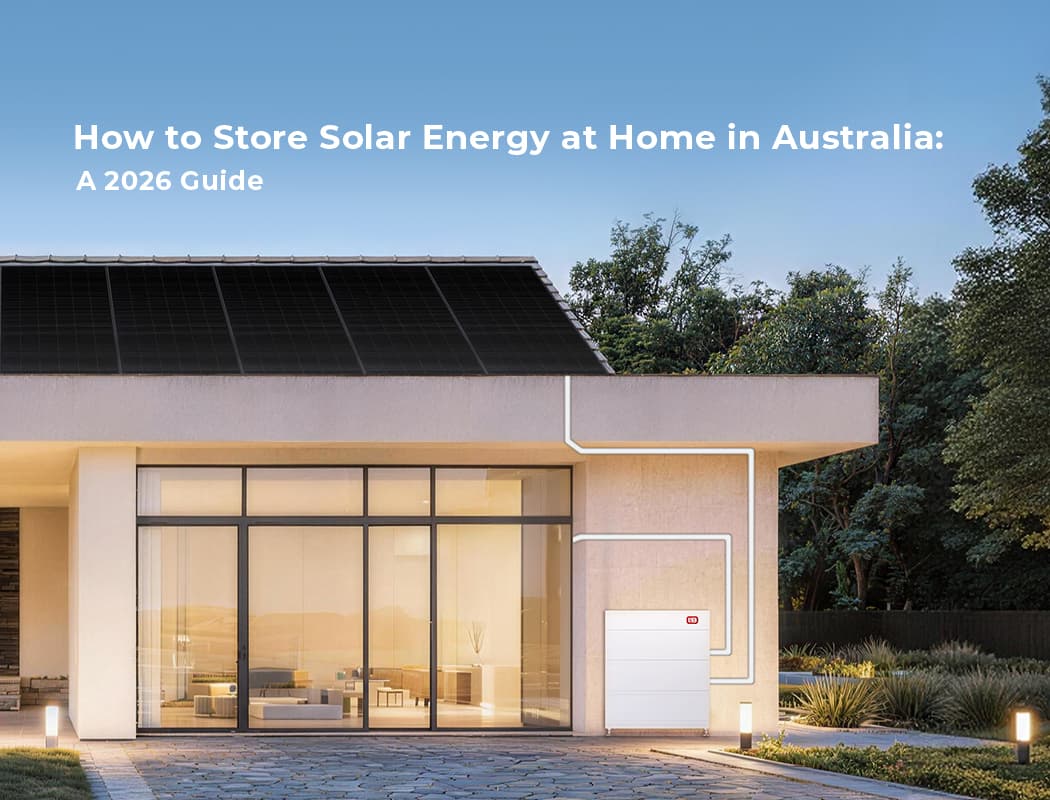
Australia has more rooftop solar per capita than almost any country on earth. Approximately 4.2 million homes generate their own solar electricity, yet the majority of them are still giving most of that electricity away. Not because they want to, but because without a battery, they have no choice. Every kWh generated while the household is empty or asleep gets exported to the grid for a few cents, and then bought back at full price when someone gets home in the evening.
The way to stop that cycle is to store solar energy at home. This guide explains exactly how home battery storage works, what size system suits different households, and why 2026 with the incoming free government charging policy, is a particularly good time to make the shift from solar exporter to solar self-consumer.
Quick Answer: How Do You Store Solar Energy at Home?
- Quick Answer: You store solar energy at home using a battery system connected to your solar panels and inverter. During the day, when your panels generate more electricity than your home uses, the surplus charges the battery instead of being exported to the grid. In the evening, the battery discharges stored energy to power your home which avoids the need to buy expensive grid electricity at peak rates.
Why Storing Solar Energy at Home Makes Financial Sense in 2026
The financial case for storing solar energy at home has never been stronger and it has nothing to do with rebates. Feed-in tariffs across Australia have declined to $0.03 to $0.08/kWh, while grid electricity costs $0.28 to $0.45/kWh at peak. Every kWh your solar panels export earns you 3 to 8 cents. Every kWh you buy back from the grid costs you 28 to 45 cents.
For a household exporting 12kWh per day at $0.05/kWh and buying back 10kWh at $0.33/kWh, the difference in outcomes between exporting and storing is striking. Exporting earns $219 per year. Storing and using that same energy saves $1,204 per year. The battery option delivers 5.5 times more financial value from exactly the same solar generation, using exactly the same panels and inverter, just with a battery in the system.
How Home Solar Battery Storage Works
The process of storing solar energy at home follows a straightforward priority sequence that your hybrid inverter manages automatically:
| Priority | Action | What This Means for Your Bills |
|---|---|---|
| 1st | Solar powers your home directly | Free electricity while the sun shines. Lower grid cost. |
| 2nd | Surplus solar charges the battery | Stores energy for later at zero cost rather than exporting for 3–8 cents. |
| 3rd | Any remaining surplus exports to grid | You still earn the feed-in tariff, just on less electricity than before. |
| 4th | Battery powers your home at night | Avoids buying grid electricity at peak rates. This is where the savings happen. |
| 5th | Grid tops up if battery is empty | Safety net but with a properly sized battery, this is rare. |
This sequence happens automatically, every day, without any action from you. The battery management system monitors your solar generation, home consumption, and battery state of charge and makes energy routing decisions hundreds of times per second. The result is that your home draws from the cheapest available energy source at every moment of the day.
What Size Battery Do You Need to Store Solar Energy at Home?
The right battery size depends on how much solar energy your panels generate that isn’t used during the day, and how much electricity your household consumes in the evening and overnight. A rough starting rule: your battery capacity should roughly match your overnight household consumption, the electricity you would otherwise draw from the grid between sunset and sunrise.
| Household Profile | Overnight Usage | Recommended Battery | LIB HomeStack |
|---|---|---|---|
| 2–3 person home, moderate usage | 8–12 kWh | 10–16 kWh | LIB HomeStack I (16kWh) |
| 3–5 person home, higher usage | 14–22 kWh | 20–32 kWh | LIB HomeStack II (32kWh) |
| Large home, EV, pool, or ducted AC | 20–35 kWh | 32–48 kWh | LIB HomeStack II (32kWh) or III (48kWh) |
| Maximum self-sufficiency or rural property | 25–45 kWh | 48 kWh | LIB HomeStack III (48kWh) |
The Upcoming Free Government Charging: Why Battery Size Matters More Now
The Australian government has announced plans to allow households with home batteries to access approximately 3 hours of free overnight electricity for charging, effectively allowing you to top up your battery from the grid at zero cost each night during off-peak periods. This policy fundamentally changes the value of battery storage for Australian homeowners.
With free overnight charging available, a larger battery captures more free electricity each night. A 16kWh battery that is already partially charged from the day’s solar generation might only have 8kWh of space for free overnight charging. A 32kWh battery regularly has more headroom and can capture more of the free charging window. You then discharge that free electricity at peak pricing during the day, turning the government policy into a daily financial return that is only available to battery owners.
Storing Solar Energy Without an Existing Solar System
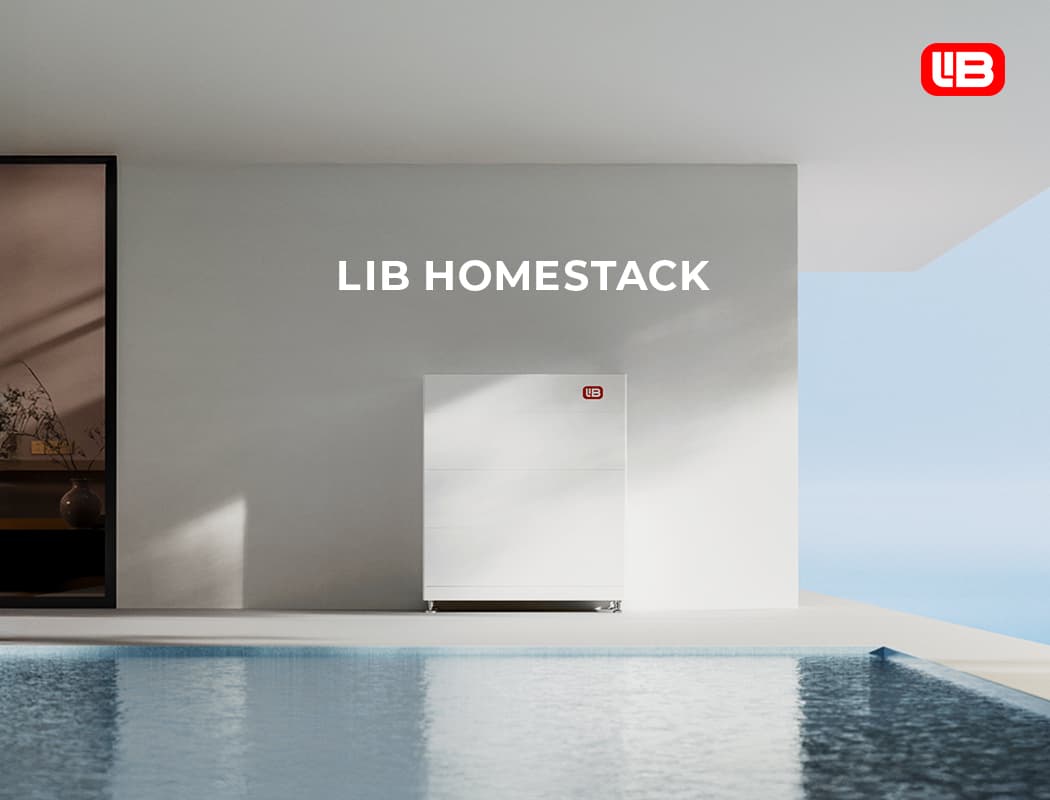
Storing solar energy at home requires solar panels but if you don’t have them yet, installing panels and a battery together as a combined project is almost always more cost-effective than two separate installations. The hybrid inverter bundled with the LIB HomeStack handles both solar and battery in a single unit, eliminating the need for a separate solar inverter and reducing total installation cost and complexity.
A combined solar and battery installation also means the system is optimised from day one for maximum self-consumption. Your installer sizes the solar system to match the battery capacity and your household’s usage which is a more precise and efficient outcome than adding a battery to an existing system that was not originally designed with storage in mind.
FAQs
How much solar energy can I store at home?
The amount of solar energy you can store at home depends on your battery’s usable capacity. The LIB HomeStack stores 16.08kWh (LIB HomeStack I), 32.15kWh (LIB HomeStack II), or 48.23kWh (LIB HomeStack III) of usable energy at 100% depth of discharge. How much of that capacity fills each day depends on how much surplus your solar panels generate beyond your daytime household consumption.
What happens when the battery is full?
When your home battery is full and your solar panels are still generating, the surplus automatically exports to the electricity grid at your applicable feed-in tariff rate. You continue to earn the feed-in tariff on any generation above what the battery and home can absorb as the battery just ensures you capture as much of your own solar energy as possible before exporting the remainder.
Can I store solar energy without a battery?
Not in any useful form for evening use. Some households use solar energy during the day to heat water via a diverter which is a low-cost way to capture surplus generation, but it does not provide the electricity storage you need for evening consumption. A solar battery is the only way to store meaningful amounts of electrical energy from your solar panels for use after sunset.
Is storing solar energy at home worth it in 2026?
Yes, for most Australian households with solar panels. Feed-in tariffs are at historic lows while grid electricity prices are at historic highs. The financial case for storing your own solar energy and using it yourself has never been stronger. The incoming free government charging policy adds a further layer of value that is only accessible to battery owners.
- Keep Your Solar Energy. Use It Tonight.
- The LIB HomeStack stores your solar generation and delivers it at peak pricing hours — giving your solar panels five times the financial return of a feed-in tariff export. Modular, expandable, and ready for the government’s free charging policy.
- ☀️ Start storing solar energy instead of selling it for 3 cents.
- 🔋 16, 32, or 48kWh. Start small, expand when you’re ready.
- ⚡ Ready for free government overnight charging.
- ✅ LFP chemistry. 100% DoD. 10-year warranty.