


What Does a Solar Battery Do? An Expert Guide for Australian Homeowners
Think of your rooftop solar system like a fridge that only works between 10am and 3pm. It is brilliantly efficient during those hours. It pumps out energy, keeps everything cold, and feels like a clever investment.
But the moment the sun dips behind the gum trees, it switches off. And that is exactly when you want to crack open a cold one, fire up the air con, and settle in for the cricket.
Without a battery, all that lovely solar energy you made during the day gets exported to the grid. Then, when you actually need power in the evening, you buy it back from your electricity retailer.
It is the solar equivalent of growing your own tomatoes, selling them for 50 cents each, and then popping down to Woolies to buy them back for $4.
So what does a solar battery do? Simply put, it fixes that problem. It captures the excess solar energy your panels generate during the day and stores it for when you actually need it.
A battery storage system integrates with your solar setup to store this energy, providing backup power, increasing your energy independence, and helping you maximise your use of solar energy.
At EnergyLIB, we are Australia’s first home energy brand designed exclusively for the home. The LIB HomeStack is available in three sizes (16.08 kWh, 32.15 kWh, and 48.23 kWh), each with 100% depth of discharge and LFP chemistry. It's important to note that a battery's total capacity refers to its maximum storage, but the actual capacity is the usable energy you can access in real-world conditions, which is often less than the nominal value. This guide explains exactly what a solar battery does, how it works with your existing solar system, and why it might be the best upgrade you can make to your home in 2026.
Quick Answer: What Does a Solar Battery Do?
- Stores excess solar energy. Captures the surplus energy your panels produce during the day instead of exporting it to the grid.
- Powers your home at night. Delivers stored energy back to your household in the evening, overnight, and on cloudy mornings.
- Reduces electricity bills. Self-consuming your own solar means buying less grid electricity at peak rates.
- Provides backup power. Keeps essential appliances running during a power outage or grid failure.
- Enables VPP participation. Lets you earn from virtual power plant programs by sharing stored energy with the grid.
By using a solar battery, you can significantly reduce your electricity bills by maximising your solar energy use. This means you buy less electricity from the grid, especially during peak times. The price of solar batteries generally ranges from $1,000 to $1,200 per kWh of storage.
How a Solar Battery Actually Works
Let’s walk through what happens from the moment sunlight hits your solar panels to the moment that energy powers your kettle at 7pm.
When sunlight strikes your solar panels, they generate electricity, which can be used immediately or sent to a solar battery for later use. To understand this, it helps to know how batteries work: inside a battery, an electrochemical process occurs between the anode and cathode, allowing energy to be stored during charging and released when needed.
In a solar energy system, this means excess power generated during the day is stored in the battery, ready to be used at night or during a power outage.
The energy stored in the battery is what powers your home when the sun isn't shining, ensuring a constant supply of electricity and helping you save on energy costs.
A typical solar battery has a cycle life of around 6,000 cycles, which means it can be charged and discharged daily for about 10 years.
Step 1: Solar Panels Generate DC Electricity
Your rooftop solar panels convert sunlight into direct current (DC) electricity. This is the raw form of solar energy. The amount produced depends on your solar system size, the time of day, and how much sun your panels are getting.
Step 2: The Inverter Converts DC to AC
Your home runs on alternating current (AC) electricity. A solar inverter takes the DC electricity from your panels and converts it into AC electricity that your appliances can actually use. This is where your existing solar system currently stops if you don't have a battery.
Step 3: Excess Energy Is Stored in the Battery
If your household is not using all the solar energy being generated (which is typical during weekdays when no one is home), the surplus has two options. Without a battery, it gets exported to the grid. With a battery storage system, the energy generated by your solar panels is stored as energy stored in the battery storage for later use.
Battery storage can be added to an existing system, though installation or configuration may differ compared to integrating it with a new solar setup. Depending on the setup, the battery can either store DC electricity directly or receive AC electricity and convert it back to DC for storage. This is where battery configurations differ, which we’ll explain in the next section.
Step 4: Your Home Uses Stored Energy When Needed
When the sun goes down and your panels stop producing, your home automatically switches to drawing power from the battery. Lights, fridge, TV, air conditioning, and all your other appliances run on stored solar energy instead of grid electricity.
A smart battery energy storage system manages this automatically. You don’t need to flip switches or manually change settings. The system knows when to charge, when to discharge, and when to draw from the grid if needed. If the battery is depleted and there isn’t enough stored solar energy, your home will automatically switch to using electricity from the grid to ensure continuous power.
Step 5: Grid Interaction (When You Need It)
If your battery runs low and your panels aren't producing (say, at 3am or during an overcast week), your home draws from the grid as backup. Once the sun comes up again, the cycle repeats.
The Solar + Battery Energy Flow
- Day (sunny): Panels generate DC. Inverter converts to AC. Home uses what it needs. Surplus charges the battery.
- Day (surplus beyond battery): Battery is full. Extra energy exports to the grid for a small feed-in tariff.
- Evening and night: Panels stop producing. Battery supplies home from stored energy.
- Cloudy days: Panels produce less. Battery fills the gap. Grid is backup only when needed.
- Power outage: Battery provides backup power to keep essential appliances running.
AC Coupling vs. Hybrid Inverter: Two Ways to Add a Battery
Proper solar battery installation is crucial for safety and efficiency, and must be carried out by a licensed electrician who is also an accredited battery installer to comply with Australian standards.
If you’re adding a battery to an existing solar system, there are two main ways it can be connected:
When considering batteries installed in your home, you’ll need to ensure there is adequate, dedicated space for the unit, taking into account the size, placement, and safety requirements, especially for lead-acid or lithium-based batteries. The physical installation should always follow manufacturer and regulatory guidelines.
If you are installing solar panels and a battery at the same time, combining both installations can reduce overall costs and streamline the integration process. This approach also helps ensure your solar battery installation is optimally configured for your energy needs.
1. AC Coupling
- The battery has its own inverter (a battery inverter) and connects on the AC side of your existing solar inverter.
- Best for retrofitting a battery to an existing solar PV system without replacing hardware.
- Involves an extra conversion step (DC to AC, then back to DC for storage, then AC again when discharging), which introduces small efficiency losses.
2. Hybrid Inverter (DC Coupling)
- A single hybrid inverter handles both the solar panels and the battery in one unit.
- More efficient, because the battery can charge directly from DC solar without multiple conversions.
- Typically the best option for new solar systems or when upgrading your existing inverter at the same time as adding a battery.
The LIB HomeStack is designed to pair with the LIB inverter as a complete home energy system, delivering the efficiency benefits of a hybrid configuration. For homes with an existing solar system and a compatible inverter, AC coupling options are also available.
What a Solar Battery Does for Your Electricity Bills
Here’s where the magic happens. By storing solar energy in a battery, you can use more solar energy throughout the day and night, which directly reduces how much electricity you buy from the grid. This means you’ll see lower energy bills every month.
Increased Self Consumption
Most Australian homes with solar panels only self-consume around 20 to 40% of the solar energy they generate. The rest gets exported to the grid for a low feed in tariff. A battery typically pushes self consumption to 70 to 90%, meaning you use far more of your own solar power instead of selling it cheap and buying it back expensive.
Avoiding Peak Rates
Many Australian electricity retailers charge time-of-use rates, with peak periods typically in the evening (around 3pm to 9pm). This is exactly when solar panels stop producing. A battery lets you cover peak-hour energy usage with stored solar, dodging the highest electricity costs of the day.
Real Savings Example
For a typical Australian household using 22 kWh per day with about 12 kWh during the evening and overnight:
- Without a battery: buying 12 kWh from the grid at $0.35/kWh = $4.20 per night
- With a battery: drawing 12 kWh from stored solar = $0
- Annual savings: approximately $1,500+ per year, plus reduced exposure to future electricity price increases
What Size Solar Battery Suits Your Home?
Battery sizing matters. Too small and you run out of stored energy before the sun comes up. Too large and you’ve paid for capacity you’ll never use. When sizing a solar battery, it's important to consider your household's energy usage because on average, an Australian household consumes about 16kWh of electricity per day. Matching your battery size to your household's energy needs ensures efficiency and cost-effectiveness.
Before reviewing the options below, note that a battery's actual capacity (the usable energy you can draw) may differ from its nominal or maximum capacity. Always check the usable capacity, as this reflects the real-world storage available for your needs.
The LIB HomeStack comes in three sizes, each engineered with 100% depth of discharge so every kilowatt hour of capacity is actually usable:
| Spec | LIB HomeStack I | LIB HomeStack II | LIB HomeStack III |
|---|---|---|---|
| Usable Capacity | 16.08 kWh | 32.15 kWh | 48.23 kWh |
| Depth of Discharge | 100% | 100% | 100% |
| Rated DC Power | 8 kW | 12 kW | 12 kW |
| Cycle Life | 8,000+ | 8,000+ | 8,000+ |
| Chemistry | LFP | LFP | LFP |
| Warranty | 10 years | 10 years | 10 years |
| CEC Approved | Yes | Yes | Yes |
When choosing a battery, consider how much power you need during peak usage or outages, as not all systems can supply enough power for an entire home. System quality that includes high-quality components and proper installation also plays a crucial role in performance, efficiency, and lifespan.
Keep in mind that more cycles per day will decrease the lifespan of a solar battery, so correct sizing for your energy usage is essential. To ensure optimal performance and longevity, solar batteries require maintenance similar to regular servicing of a car.
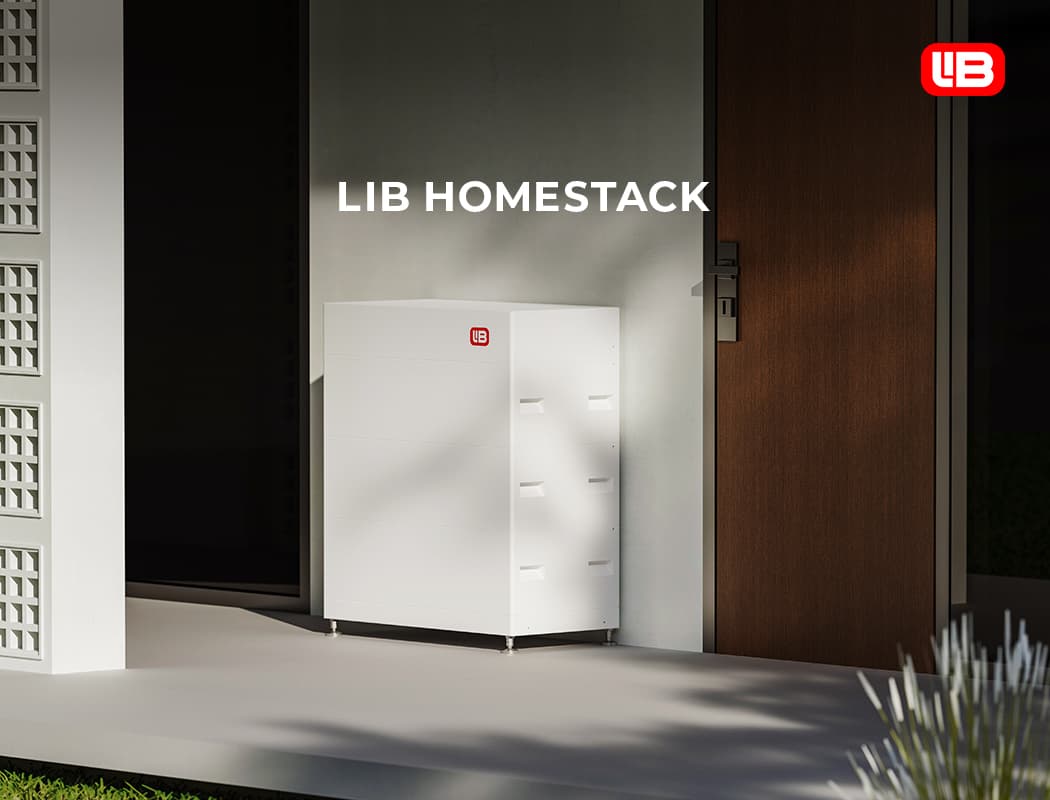
LIB HomeStack I (16.08 kWh): The Everyday Champion
- Suits households of 2 to 4 people with daily energy consumption of 15 to 25 kWh.
- Captures surplus energy from a 5 to 8 kW solar panel system.
- Covers typical evening and overnight usage with headroom for cloudy days.
- 6 kW rated DC power handles standard household loads.
LIB HomeStack II (32.15 kWh): For Higher-Usage Homes
- Ideal for larger households, EV charging, ducted air conditioning, or electric hot water systems.
- 12 kW rated DC power supports simultaneous high-draw loads.
- Pairs strongly with larger solar systems of 8 to 13 kW.
LIB HomeStack III (48.23 kWh): Maximum Energy Independence
- Designed for large properties or households aiming for near-off grid living.
- Powers most large homes through an entire overnight period and into the next morning.
- Best suited to homes pairing with larger solar systems of 10 to 15 kW or more.
What Solar Batteries Do That Most People Don't Realise
Reduce Strain on the Grid
Every home battery reduces peak demand on the electricity grid. This helps stabilise prices for everyone, not just battery owners. Your solar and battery system becomes part of the solution to Australia's broader energy transition.
Protect You from Price Rises
Australian electricity prices have risen over 200% since 2000. A battery system reduces how much grid electricity you need, which directly reduces your exposure to future price increases. Every kWh you generate and store yourself is one less kWh you're buying at whatever the market rate becomes.
Store Energy for Years
Modern lithium ion batteries like the LIB HomeStack use LFP (lithium iron phosphate) chemistry with 8,000+ charge/discharge cycles. That translates to 22+ years of reliable daily operation, far beyond older lead acid battery technology. Flow batteries and other alternatives exist, but lithium ion dominates the Australian home battery market for a reason: reliability, energy density, and long lifespan.
Why the LIB HomeStack Is Built for Australian Homes
- Designed for the home. Australia's first home energy brand built exclusively for residential living.
- 100% depth of discharge. Every kWh of capacity is usable energy. No hidden buffers.
- Stackable and modular. Start with 16 kWh, expand to 32 or 48 kWh as your needs grow.
- IP65 rated. Waterproof and dustproof enclosure suitable for indoor or outdoor installation.
- Layered safety. Circuit breakers, automatic fire extinguishing, pressure relief, 48V low-voltage system.
- Minimal design. Made to blend into your home, not stand out. Whisper-quiet natural convection cooling.
- CEC approved. Eligible for the federal battery rebate, state programs, and VPP participation.
- 10-year warranty. Backed by comprehensive coverage on capacity and cycle count.
FAQs
What does a solar battery do in simple terms?
A solar battery stores the extra solar energy your panels generate during the day so you can use it at night. This reduces how much electricity you buy from the grid, lowers your power bills, and provides backup power during outages. A battery storage system enables you to store and use your own solar energy efficiently, making your home less reliant on the grid and maximising the benefits of your solar setup. Without a battery, surplus solar energy gets exported to the grid for a low feed-in tariff and you buy grid electricity back at higher peak rates in the evening.
Can I add a solar battery to my existing solar system?
Yes. A battery can be added to an existing solar PV system through either AC coupling (with its own battery inverter) or by upgrading to a single hybrid inverter that handles both solar and battery. The LIB HomeStack pairs with the LIB inverter as a complete integrated system, delivering the best efficiency. Solar battery installation must be carried out by a licensed electrician who is also an accredited battery installer to ensure compliance with Australian safety standards. Speak with an accredited installer to assess compatibility with your existing setup.
Does a solar battery provide backup power during a blackout?
Yes, if the battery system is configured for backup. Without a battery, solar panels automatically shut down during a blackout for safety reasons. A battery with backup capability keeps essential appliances running during outages. The size of the battery determines how much of your home can be powered, from essential circuits only to whole-home coverage.
How much money does a solar battery save on electricity bills?
Savings depend on your energy usage, solar system size, and electricity rates. For a typical Australian household that stores and self-consumes 12 kWh per day from a battery instead of buying at peak rates, savings are typically $1,200 to $1,800 per year. Larger households and those with EVs can save more.
You may also be eligible for government incentives to reduce the upfront cost of a battery system, such as the Federal Government's Cheaper Home Batteries Program, which offers around 30% off the initial price (subject to eligibility), and small scale technology certificates, which can further subsidise installation costs through official funding mechanisms.
How long do solar batteries last?
Quality lithium ion batteries like the LIB HomeStack are rated for 8,000+ charge/discharge cycles and typically last 22 years with daily use. LFP (lithium iron phosphate) chemistry, which the LIB HomeStack uses, is longer-lasting and more heat-tolerant than older NMC chemistry, making it well-suited for Australian conditions.
Ready to Put Your Solar to Work After Dark?
The LIB HomeStack and LIB inverter are a complete home energy system that stores your solar energy by day and powers your home by night. Designed for everyday Australian living, built to cut your electricity bills for years to come.
🏠 Australia's first home energy brand built exclusively for the home.
⚡ 100% DoD. Every kilowatt hour of capacity is usable energy.
📦 Three sizes: 16, 32, and 48 kWh. Stackable, expandable, right-sized for your home.
🔒 Layered safety: circuit breakers, fire extinguishing, pressure relief.
✨ Minimal design, IP65 rated. Indoor or outdoor installation.
🔋 Complete system: LIB HomeStack + LIB inverter. CEC approved and rebate eligible.